Mangroves Are Mighty!!

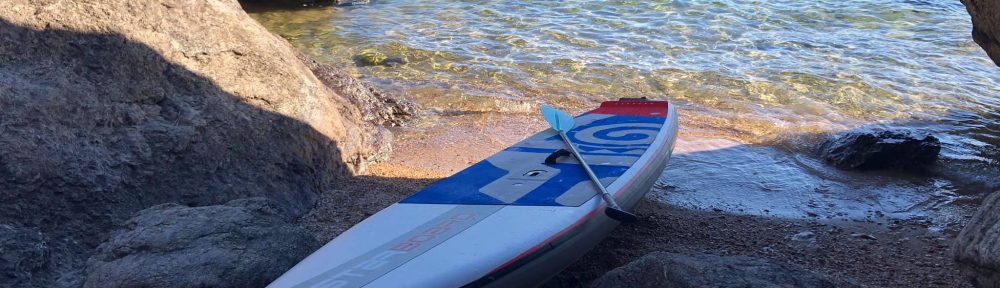
It’s a fantastic feeling to purchase a product for a sport you love – and know that our Oceans and environment are better for it. That’s the commitment Starboard has lived up to.
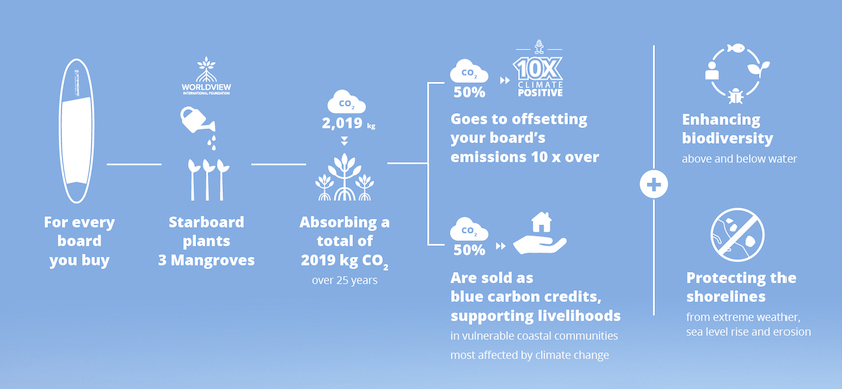
For every board, Starboard plants 3 Mangroves, offsetting the board’s CO2 emissions more than 10X over.

Starboard has partnered with Worldview International Foundation to undertake the project. Why Mangroves?

From the Starboard Blue website Each of us generates an average of 4.7-tonne CO2 emissions per year, the major cause of our climate problems. Mangroves are some of the most efficient green machines to help counter this, as one tree absorbs 673 kg of VCS CO2 over 25 years. Further, each mature tree produces enough oxygen for four people.

Mangroves also protect coastal lives and properties from extreme weather and increase ocean life by 50%, as well as the area’s general biodiversity. Starboard’s initial aim is to plant 100 million mangrove trees together with WIF, absorbing 67,3 million tons of CO2. There is a potential to plant over one billion mangroves on available land in Myanmar.

From the Starboard Blue website (you can also click the image below for more) The 3 Mangroves draw down a total of 2019 kg CO2 (3 x 673 kg) over 25 years. Half of this (1008 kg) goes to offsetting the board’s emissions 10X over; an average emission of a Starboard is 100 kg CO2. The other half gets sold as carbon credits, where the proceeds go to supporting livelihoods in vulnerable coastal communities.

Additionally to the 3 Mangroves per board, Starboard calculates and report Starboard’s total carbon footprint annually across scopes 1, 2 and 3. They then offset these emissions 10X over, as well as the footprints of events they have supported, leaving Starboard to be 10X Climate Positive. Through the footprint calculations and offsetting, Starboard aims to be completely transparent about its impact on the planet, as well as to showcase a way of turning negatives into positives.
FORE! Golf Ball Alert

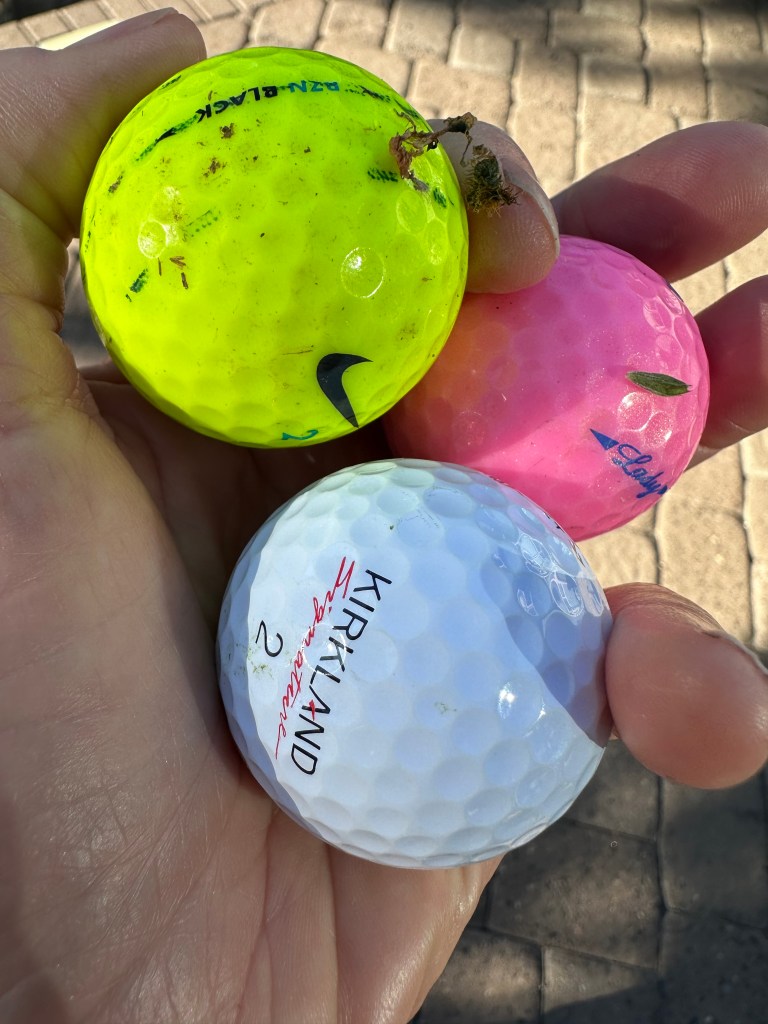
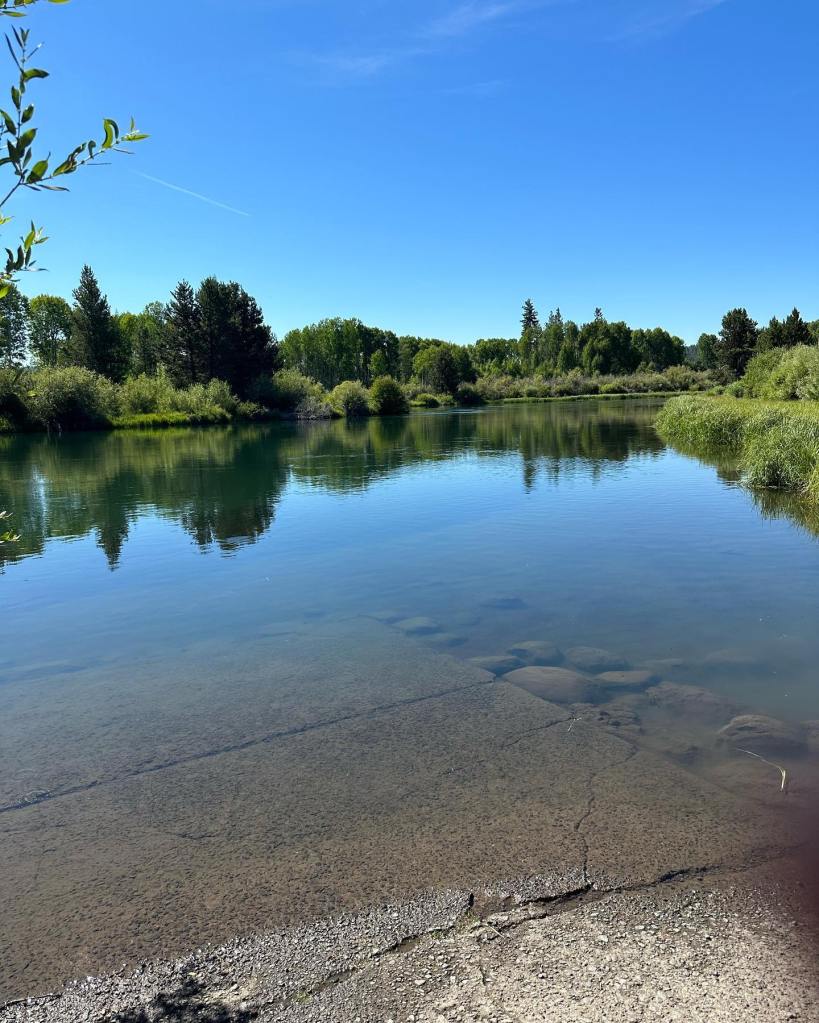
I often paddle is an exquisite stretch of river just 10 minutes from my home. I rarely find any litter at the put in and the single beer or soda can may show up along the way – but I almost always find some golf balls.

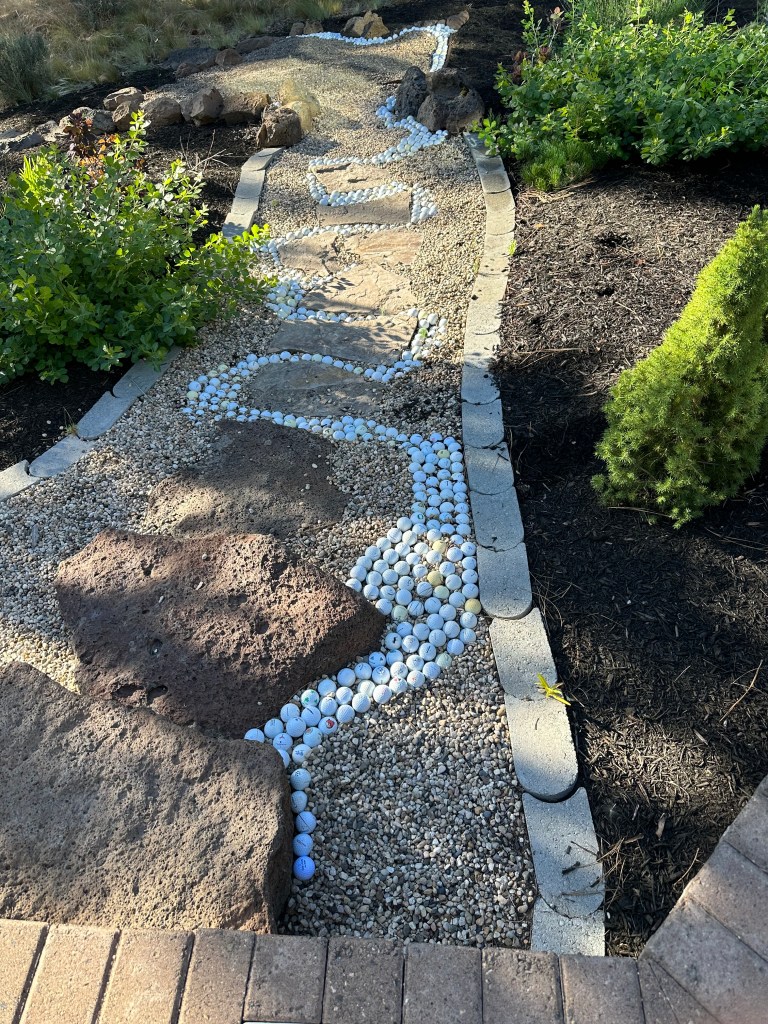
I have been collecting golf balls found on land and in nearby lakes and rivers for years. Over 1,000 golf balls decorate my walking path. During my last paddle I only found three golf balls, but it got me thinking. How much impact do golf balls have on the ocean, a lake or a stream.

I discovered some answers online. It’s reported that hundreds of thousands of golf balls are being found in both freshwater and saltwater sources, there’s clear evidence that the answer to the question, “Are golf balls bad for the environment?” is a resounding yes.

You can’t escape the fact that, just plastic and other manufactured substances, golf balls are essentially litter. In both fresh and saltwater they are bad for the environment and those bodies of water. Golf balls will eventually leach plastic into the water causing issues for it and its ecosystem. 

On my last paddle I collected just the three golf balls I saw, but that is nothing compared to the actual problem. Why are golf balls dangerous for the ocean, and what is being done to remedy this problem? The answer is both thorough and lengthy. You can go directly to

Or you can read what Matt (author of Just Golfin’) shared on his website here.

Into the Ocean Instead of Into the Hole

While we have known about plastic in the ocean for years, there wasn’t a particular emphasis on golf balls and their impact on marine life until a 2019 research paper was published in Marine Pollution Bulletin. 

According to the research paper, the team collected 39,602 golf balls from coastal environments associated with five golf courses in California from May 2016 to June 2018.

When efforts were helped by the Monterey Bay National Marine Sanctuary and the Pebble Beach Corporation, this came to a total of 50,681 golf balls until the paper was published. 

This equaled approximately 2.5 tons in debris. The researchers have estimated that almost 62lbs of material eroded from the balls they recovered.

The Dangers That Golf Balls Pose To The Environment

Despite the ever-increasing scale of the problem, people continue to ask, “Are golf balls bad for the ocean?” because they don’t fully grasp how these synthetic objects can cause damage. The answer is simple: golf balls don’t sit in one place. 

They get moved around, and they corrode, causing environmental damage and even endangering marine life.

Are Golf Balls Biodegradable?

Research from the Danish Golf Union has shown that golf balls take about 100-1000 years to decompose naturally. With 300 million balls lost in the U.S. alone and plenty of these ending up in our waters, this means that the golf balls will be sticking around for a long time.

Are Golf Balls Toxic?

Many people don’t understand the problem since they don’t think of golf balls as toxic. However, they don’t understand that the decomposition process involves golf balls being dissolved and thoroughly breaking down. 

During this process, the balls leak petroleum and high levels of heavy metals such as zinc which can then attach to the ground and poison marine life and plant forms. In addition to worsening the microplastic problem, golf balls in the ocean also leak chemical pollutants.

According to Hakai Magazine, the planet has over 32,000 golf courses, with many of them situated next to the ocean. With approximately one billion golf balls lost every year, a lot of this plastic (almost 100 million pounds worth) is bound to end up in the ocean.

It’s easy to make the leap from the concept of a seemingly innocent golf ball in the water to all the rest – and the list is endless. Beginning with the most unnecessary and ubiquitous one – the plastic water bottle. But that is a story for another day.

A Wing, a Zen and Fun

Summertime at the lake. I was born and raised an ocean girl, 52 years living in South Florida playing in the Atlantic. The first few decades I resided in Oregon had me exploring mountain trails in a land-based plethora of fun. Then in 2006 I had the chance to paddle on a stand up paddleboard – tentative at first but HOOKED!

Over the next years there was barely a pocket of water – lake, river, stream or creek – that I didn’t paddle. My favorite spots were even more wonderful when the wind was light and the water glassy. The next eye-opener for fun was a wild 20-30+ mph downwind run on the Columbia River. Wind was suddenly my paddling friend! From there it wasn’t long before wind, waves and the North Shore of Maui beckoned me to explore the run from Maliko Gorge to Kanaha Beach Park, a gnarly 8 mile downwind adventure.

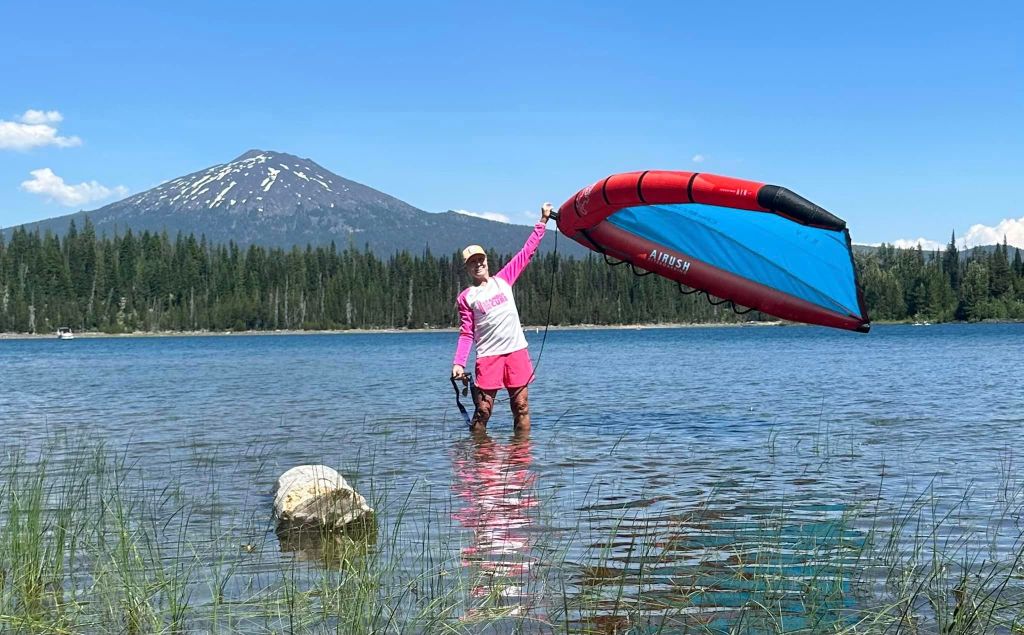
But there were still those exquisitely glassy paddles when clear alpine lake water or early morning dawn patrol paddles to love. In fact, when I would get to my favorite lakes and discover that the wind was already gusting, swirled by the mountains’ impact on air currents I would not be so thrilled. Then last summer I got the “golden ticket!” For my 73rd birthday in June 2022 I was thrilled to get the Starboard 4-in-1 10’4″ inflatable and a quiver of three Starboard AirRush V2 FreeWings. YES! I began to seek out the afternoon winds!

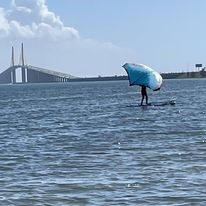
Over the winter exploring Tampa Bay, the Gulf of Mexico and other Florida waterways I had an exhilarating great time! My new routine is to head to the water with my 12’6″ Starboard Zen Inflatable Touring board while the wind has not yet picked up. Little by little as the day wears on – the wind usually becomes wonderful. Winging has given me ….. well, WINGS!!!!!

Summer is short here in Central Oregon. Every available opportunity to get on the water bare foot and warm is treasured. And now, wind or no wind, I am an extremely happy water woman.