Sweet -Race Jersey Next Generation

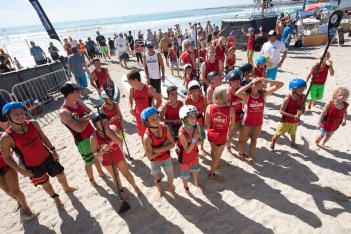
sswjer-proIf you followed the inaugural 2015 Pacific Paddle Games you may have noticed everything about it was bigger than life, from the oversized waves to the above-average temperatures. The best was the creme de la creme athletic talent that showed up from every corner of the world to compete for the biggest number of all: a record-setting $55,000 prize purse. With all the photos and live coverage of the event, one other thing that literally stood out – was the bright Sweet Waterwear jerseys worn by the athletes – from the world’s top Pro paddlers to the XXS groms.

With many more top athletes enjoying the performance of Sweet Waterwear jerseys throughout 2015, it seemed like a good time for Elder SUP (ES) to go behind the scenes of this unique specialty Hawaiian brand based out of Honolulu. We were fortunate to have this chat with Sean Sweet, founder and visionary behind the brand.

ElderSUP: Sweet Waterwear was the official PPG race jersey on the estimated 450+ Open & Elite racers at the 2015 Pacific Paddle Games, the successor to the Battle of the Paddle. What a format and what an event for the inaugural year!  How did this all come about?    

SweetWaterwear:  As soon as news broke about the PPG I approached Andrew Mencinsky (Marketing director at SUP the Mag & race organizer for PPG ) early on. Andrew has known about Sweet Waterwear & the high quality of our gear for quite some time.  He knew many of the top SUP racers already use and swear by our gear. He’d also seen our Men’s Nirvana Race jersey at other prominent races and from team jerseys that we’ve done for many of SUP’s top board brands.  Andrew and the team at SUP the Mag & TEN (The Enthusiast Network) really wanted to step things up at PPG. They were quite determined they were not going to just follow in the footsteps of the Battle of the Paddle. They wanted every aspect of PPG to be “Bigger & Better.” One of the most obvious “on-screen” ways to do that was to upgrade and outfit ALL of the athletes in beautiful custom PPG jerseys. (video teaser here)

Andrew wanted different colors by gender and group. We are one of the few companies that was large enough to do that and still be flexible enough to produce within a somewhat tight time constraint. For all these reasons, Sweet Waterwear was an obvious and easy, quality choice that met all their objectives.  

ES:  The vibrant colors on all the Sweet Waterwear jerseys we saw at PPG were exceptionally bright and highly visible in varied ocean conditions, at a distance & on the webcast. 

SW:  Stepping out of the box and pushing the bright colors was key essential goal for PPG.  I’ve had these colors available – but no Race Director had ever ventured out of the color norm with us, before PPG.  Fortunately Andrew knew well the live and telecast value of adding bright colors to the mix was far more than just a safety consideration – he recognized that the bright colors would really “pop” on the webcast providing a much richer and vibrant visual experience.

ES:  We noticed right away that the Women’s jerseys at PPG were trimmer and a different cut.  What brought about your developing a women’s specific race jersey? 
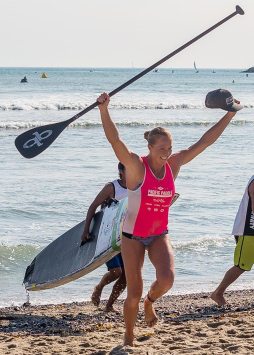
swwppgcandice2

“Our constant goal at Sweet Waterwear is to raise the bar in fashionable, functional activewear,”

SW: With the huge success of our Men’s Nirvana jersey, it was a logical extension for us to make a (literally) “more fitting” Women’s paddlesport tanktop.  Women are far more fashion, fit and style conscious. We realized that wearing a downsized boxy men’s jersey just wasn’t really cutting it.  The difference is more than just color. It fits better due to details like binding versus wide trim along with subtle, but noticeable, hourglass shaping.  Now, the ladies look more flattering and feel better about how they look in our Sweet Waterwear jerseys while enjoying the same ultralight breathing performance of the Mens jersey, but in a more feminine, fashionable tanktop.  

ES: Everyone performed to the max at the 2015 PPG but  looking for the true stars of the day, they were also some of the smallest. The future of the sport is growing up on waves around the world, and we got to witness it during the Grom and Junior Pro races.

SW: Absolutely, as the PPG event showcased so very well, the future of our sport is a powerful field of youth. And for the first time ever, we made sure they had race jerseys designed specifically with the smaller sizes in mind.
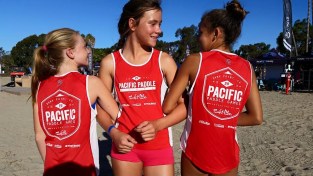
sswjerkids The kids were not an afterthought (as they often are at most other races).  We offered size XXS jerseys for the first time ever to accommodate the keiki (children). With the kids we made the Boys Red and Black while  the Girls had Red and White. It was subtle, but still made a perceivable distinction.  The kids were super stoked to have their “very own” special kids jerseys.  We were equally stoked to provide the kids with something “just for them” to enhance their performance and the PPG race experience.  

These custom PPG jerseys have become a proud keepsake and talking point long after the race has been over.  The kids are especially proud to wear their PPG race jersey at other races and while training no matter where they may live and paddle.  We often refer to the robust “Retention Value” of our high quality race jerseys that get “great mileage” of exposure long after the event is over.  sww-kids
ES:  What is your background and how did you develop the Sweet Waterwear brand from your past expertise? 

SW: I have 30 + years in the apparel industry, most of it in casual and active sportswear. Shortly after moving to Hawaii it was quickly evident to me (as a new paddler) that the SUP market was very much under-served, especially on the Women’s side. I had just come off an 11 year stint at well-known Women’s sportswear company. So I knew how to bring a lot of technical fabric and sourcing expertise to the table.  Being based in Hawaii helps enormously. We can test year round. I have access to all types of wind and watersports, as well as, all  levels of paddlers including several of the world’s elite racers. Many of these elite water athletes  have become ambassadors for our line after testing out our gear.

Since Day 1 – when we launched at the one (and only) Battle of the Paddle Hawaii (in 2010) we have offered a more highly evolved line and more technical detail that both athletes and everyday paddlers can really appreciate – so it stands out in the marketplace.  Our race jerseys are well received by so many elite and fitness paddlers.  Pro racers have the opportunity to wear and try many different styles and brands, but the feedback we get and then incorporate into our designs demonstrates how we are meeting the trifecta or “Sweet Spot” of paddler’s needs in style, function and performance.

ES: How is Standup Paddling gear different than, say, Surf gear?

SW: Stand-up paddleboarding is not like surfing in that it is largely an “on-the-water” activity versus often “in-the-water” like surfing. Tight rashguards don’t work as well. They are skin-tight, which by design will help keep you a little warmer. In stand-up paddleboarding, you are burning calories, and most paddlers want & need to dissipate that heat. Furthermore, you are also fully exposed to extremely high levels of sun when you are standing on the water. The combination of direct sun and indirect sun reflected off the water surface really intensifies your exposure. We are a core SUP brand and have pioneered crafting far more fashionable, superior quality, sun-protective gear specifically made for stand-up paddleboarding and other similar paddle sports like outrigger canoe paddling, kayaking, canoeing, dragon boat, etc.  We are also very proud to be cut and sewn in the US using high quality European spec fabrics. There are hardly any Surf brands that can say that – most all are produced offshore in Asia with cheap labor and heavy “cost consideration” given to margin – which inevitably compromises on garment quality.
swteamhi

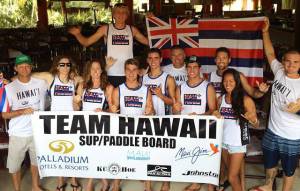
We already have what is perhaps the most popular men’s stand-up paddleboard racing jersey on the market. We offer custom printing and even co-branding opportunities. It’s market that we got into early and one where we have established a high profile & strong presence.  If you happened to catch all the ISA World Standup Paddle and Paddleboard Championship action last May you saw Sweet Waterwear jerseys on Team Hawaii.  Zane & Matty Schweitzer have both declared them “Best jerseys EVER!!” Looking at the Sweet Waterwear ‘ohana I guess that is the opinion of many of the best in the world.

ES:  I have noticed a lot of detail and innovation in your latest styles. like in my Sweet Waterwear Ka’iulani Zip long sleeve performance top with the neck zipper, thumb holes & big zippered back pockets, especially as the days turn cooler here in the Pacific NW.  How did you come upon the name you chose for that style? 
swback3

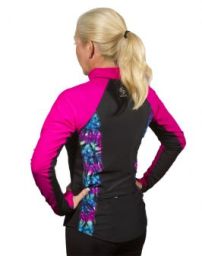
Check out the bold print on the back of the Ka’iukani (also available in white-sky-turquoise)

SW:  Ka’iulani loosely means, or implies, ‘rich in health, spirituality and prosperity.’ The meaning resonated with me because, in my opinion, so many standup paddlers seem to reflect these qualities and values.  Further Princess Ka’iulani was/is an important historic figure in Hawaiian history & culture. The Kaiulani is our our top-of-the-line full featured long sleeve so you could also say it’s fit for royalty.  

ES:  What can we expect next from Sweet Waterwear?
SW:  We are driven to excellence, so we will continue to combine high quality performance fabrics with thoughtful superior design & our special “Handcrafted in USA” manufacturing.  We are getting deeper into prints as accents & adding more styles like dresses & hoodies.  Further we are very excited to announce that this summer we will be rolling out a complimentary special collaboration – a new line called “SWT KSS”.  It’s sort of a double entendre & acronym for a limited collection  designed by Kimberly S. Schamber and made by Sweet Waterwear.  Look for the SWT KSS collection to launch in Spring / Summer of 2016.     
Pacific Paddle Games 2015: Talk Story with Cyril Burguiere

 KIALOA ‘Elele Cyril Burguiere has a passion for paddling. He’s definitely not limited to rivers and oceans in his pursuit of high end training and speed – this busy guy trains whenever and wherever the path leads.
And then there is the day job.  It’s not easy for anyone to get in shape for the dmands of an ocean SUP event. Cyril shares that he came to the 2015 inaugaral Pacific Paddle Games exhausted from a grueling work week. In his words, “I had been to Toronto Mon-Wed with many customers and late nights getting proposals completed. Then work continued late Thursday and a little into the weekend. I actually brought my laptop to the beach. Not the first time – my Payette Games experience was the same (2014). Week prior was travelling too. When I am on the road I use the Exer-Genie exercise tool in my hotel room to keep my pulling muscles working on business trips

Continue reading

Shoulders, Quads, Reps: SUP Training Fun

My favorite paddle last week came on a windy day – with wind in the face while going upstream.  As I dropped my board into the Deschutes River crowded with traditional summer-time tube-floaters and all types of paddle craft I was thinking about getting a nice interval training session.  I was using my KIALOA Tiare Adjustable paddle extended almost 3 inches longer than when I used it last week for surfing.

The wind was cranking downstream while I paddled upstream

The wind was cranking downstream while I paddled upstream-

In order to monitor a bit about my training paddles I use Nike+ on my iPhone to get feedback on minutes per mile. I wear a Polar heart rate monitor because sometimes I tend to go too hard for too long and start to erase the fun factor.

The upstream/wind-in-face leg: Imagine my surprise when I heard the robo-voice from the Nike+ app say, ” One mile. Average pace 18 minutes per mile.” Okay,” I thought to myself, “When the breeze is in my face and I am going up current in this section of the river I usually average 20 minutes a mile.” Weird, I wasn’t trying so hard, my rate of perceived exertion (RPE) was medium, maybe a 6 out of 10.  Heart rate was in a manageable range. What was making a difference?

I believe I was cranking out the miles in a quick but seemingly easy manner because of two things.

First of all, I did feel powerful. My board seemed to be gaining power from my legs with each paddle – and the only thing I was doing differently was maintaining a more complete rotation of my upper body. Core engaged and tail tucked. I have been training on non-paddle days with the TRX system. A neutral spine is a prerequisite to doing the TRX program. Perhaps a regular routine of that practice at that had provided me with a better “engine.” I have had a habit of bending at the waist, particularly when skiing. Muscle and body memory around creating that more upright, neutral spine might be a valuable transfer to more than just my SUP technique.

Technique makes all the difference. I get a great deal of insight by reading Dave Kalama’s blog. He recently wrote, “Paddling most of the time needs to be a very flowing and rhythmic action, not a tense muscle flexed series of positions, but rather a constant continually moving movie. Don’t get me wrong, there is a time and a place to exert yourself, but if your base stroke comes from a place of rhythm and flow, when you exert yourself you will be much more effective and efficient. The best fix for it is to greatly reduce your power level and learn how to use your technique as your driving force, not your power output. Decrease your power to the level that you don’t feel like you’re doing any work at all, and just concentrate on technique. You’ll be surprised at how fast you go.”

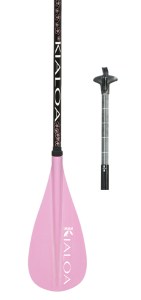
Tiare Paddle In the Quiver: The team at KIALOA Paddles has lately been offering much more. On my “favorites” is the amazing Tiare paddle blade. I particularly like the adjustable shaft with a paddle blade made for especially for women. Even though the Tiare is smaller in square inches, the bottom third (where the catch takes place) is wider. This allows me to really feel and accentuate the catch of my paddle stroke – thus gaining more effective power as the stroke plays out.  In addition, Dave Chun explained that the flex of the blade allows me to “feel” the water more effectively throughout the stroke.

tiare-adj-l

Kialoa Paddles Tiare is a “must have” for a woman’s quiver – demo one as soon as you can

Dave shared this in more detail, “I feel a good paddle needs to flex. The flex gives feedback to the paddler, which makes for a more efficient catch and pull. What the blade is doing in the water is important if a paddler wants to continue to develop their technique. I believe stroke technique is a lifelong journey. Many paddlers only think in terms of fitness when training. But, consider how most athletes are trained for their sport. Components of the sport are broken down in to small segments and drilled over and over again. Practicing an inefficient paddling stroke will get you fit, but it will limit the threshold of one’s overall speed.

The stiffness or flexibility of the paddle must be scaled to the strength of the athlete. Generally speaking, men are larger, and thus stronger. The typical woman, cannot “load” a blade or a shaft designed for a man. It is not simply a matter of building a blade with less surface area. The blade, as well as the shaft, must load under a woman’s energy output. 

Designed and scaled for women every step of the process: The Tiare was designed during the tooling/molding phase as a women’s paddle. The rib is narrower and lower in height than the Insanity. It was scaled to a women. On our part it was a commitment to our women’s program. The Tiare mold or “Shorty” as we nicknamed it, will never be used for an all-around or man’s paddle.

During the design phase we decided that a women’s shaft should be less than 28mm. 28mm is the standard diameter of a men’s Olympic weight lifting bar. 25mm is the standard for women. 25mm is pretty small for a paddle shaft. We settled on the 27mm-27.5mm range. Round shafts flex more than oval shaft, dimensions  and material lay-up being equal. Like designing a pair of gender specific blue jeans, we started with a clean slate when we designed the Tiare – for women.”

Simply, I am STOKED!!!! Off to about 8 weeks of training before I use my Tiare paddle in the Colombia Gorge Paddle Challenge – will we see you there? I will be testing the Tiare that is being developed for women who race by the innovative team at KIALOA Paddles. Look for us in the KIALOA Paddles tent for some “talk story” fun.

Do It! – Your Bucket List SUP Event

Have you got that SUP dream, that event that fuels your dreams and motivates your training? Do you have what it takes to make it happen?

Got a dream? Let's talk story with Steve Gates, GM Big Winds and coach

Got a dream? Let’s talk story with Steve Gates, GM Big Winds and coach

We’ve heard it before, “Access to success is through the mind,”  – but for Steve Gates access came through the heart, spirit, absolute grit and gumption, as well as the mind! I had a great conversation with Steve, GM of Big Winds in Hood River and coach of the JET team, yesterday. We chatted about his recent three-person team crossing of the Ka’iwi Channel at the 2014 Molokai2Oahu (M2O). Rob Dies, Gregg Leion and Steve made a plan to do the Molokai to Oahu – and they did it! But let’s back up just a bit.

I first met Steve, now a strong, tall, fit guy sharing smiles and stoke, in August 2012 at the 2012 Columbia Gorge Paddle Challenge. That event was his baby. A health issue had him terribly underweight but he was working hard and cheering on his JET team even though he was almost too weak to stand. By December he was fighting for his life. In June of 2013, about six months after Steve had been frighteningly close to death’s door,  we went to Hood River for a down wind clinic with Jeremy Riggs. As we grabbed our glides and rode the 8 miles of Columbia River from Viento to Hood River there was an “energy bunny” paddling ahead and back, from paddler to paddler, joining Jeremy in on-water coaching with relentless grins and technique tips – Steve Gates.

According to Steve, “I was still denying the physical limitations of my body and was running on enthusiasm and joy just being out on the water and paddling.” And here’s the story  too cool not to share. Six months before, in December of 2012,  when Steve was too weak to either hold a paddle or stand he articulated a dream. As we rang in 2013, Steve shared his dream of doing the Molokai 2 Oahu in 2014 from a hospital bed while continuing his battle with a dire health situation.

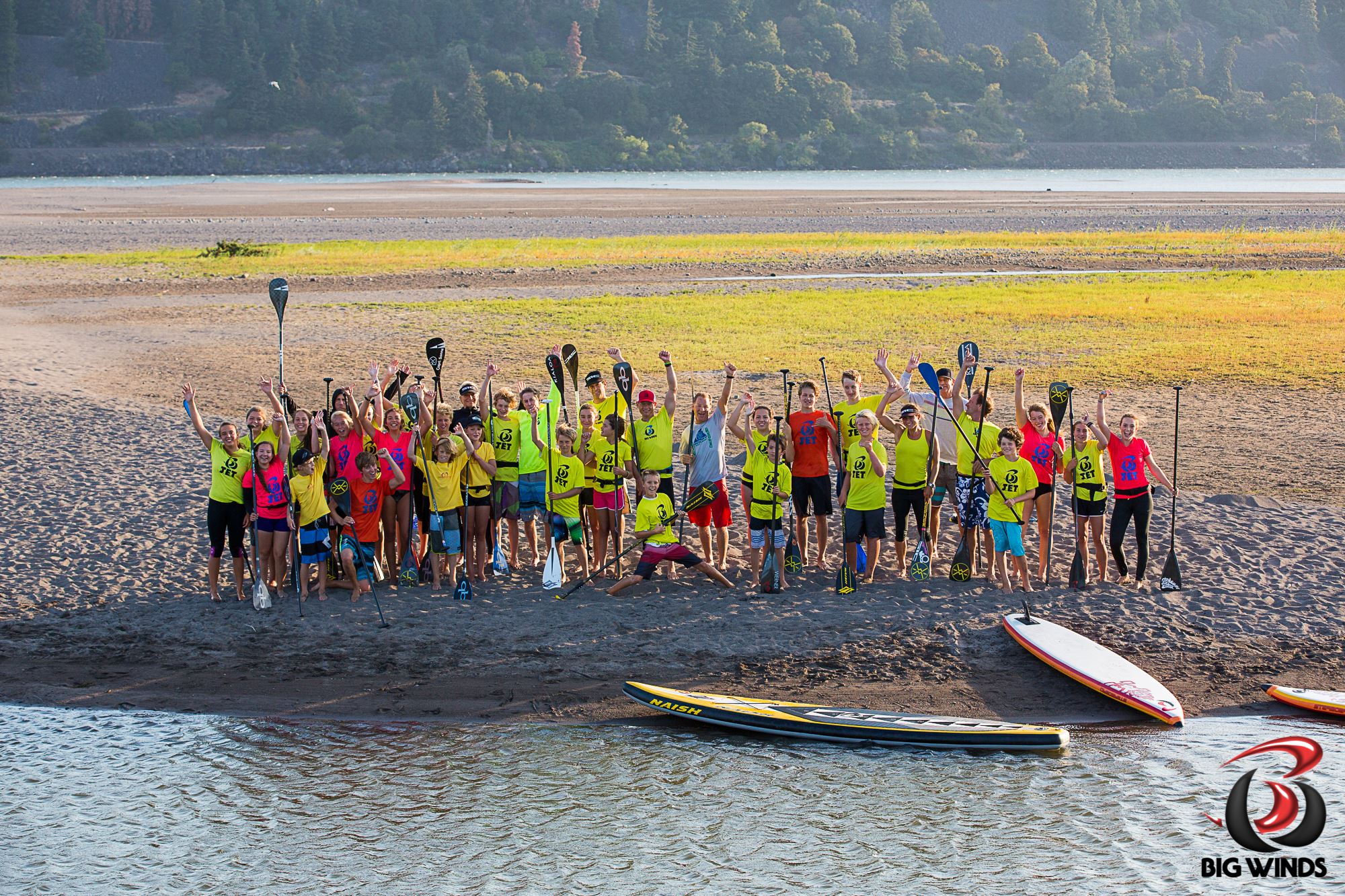
Big Winds JUnior Elite Team (JET) loving their tough practices and huge stoke

Big Winds JUnior Elite Team (JET) loving their tough practices and huge stoke

As a life long water athlete and coach, Steve never asked others to do what he would not do. Ask any JET team member and they will tell you that they didn’t mind the early morning summer practices (well, not too much) because Steve was always there and he did what they did. He sweated with them and panted after a tough interval – and he made it fun. Steve always asked his team to follow their dreams and aspire toward what they really want – and so he did the same.

In early 2013 Steve, Greg and Rob were making plans for an escort boat, for local support they would need for M2O and for a training plan that would let them reach their dream.

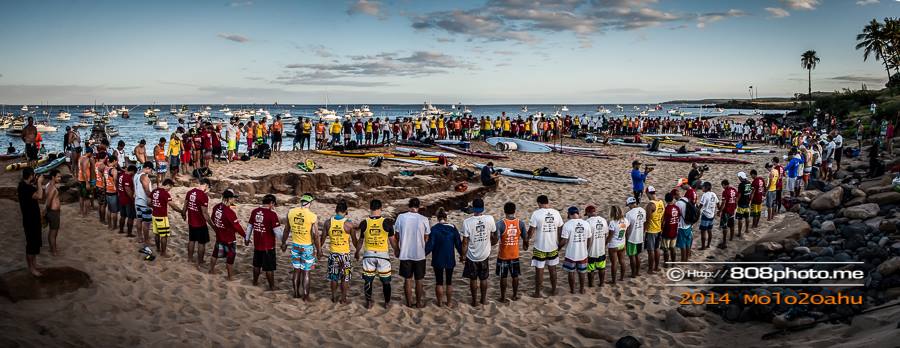
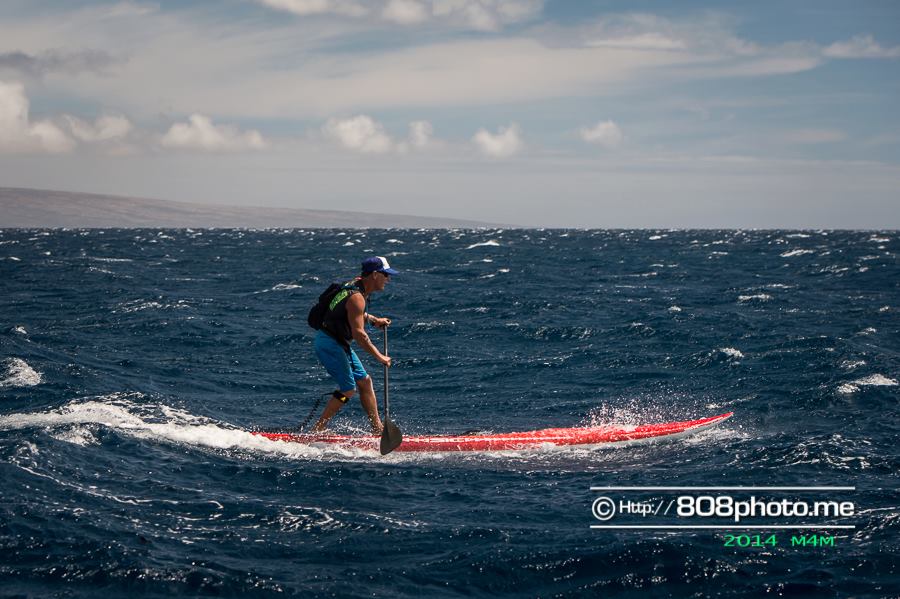
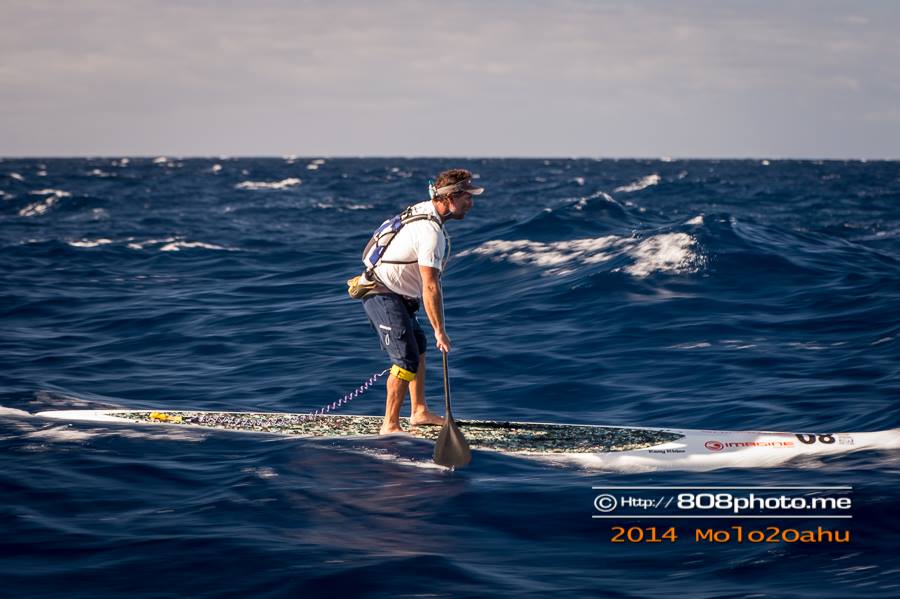
A powerful moment - Photo by 808Photo.me

A powerful moment – Photo by 808Photo.me

There were plenty of ups and downs. One bout of dehydration nearly dashed all hopes for Steve to get to the physical level of strength and endurance he’d need. “Access to success is through the mind, ” and in Steve’s mind he was at M2O – and by July 2014, he actually was there.

According to Steve,”The morning flew by and before we knew it we had finished all preparations and were at the start point on the beach ready for the start.  Soon, I was in the water, sitting on my board next to Connor Baxter. Neither of us knew what the day would hold.” For Connor it was a record-breaking win, for Steve and his team it was the culmination of a long journey from the start of a 32-mile paddle across the challenging and treacherous “channel of bones.”

Rob Dies, Gregg Leion and Steve Gates just before the start of M2O

Rob Dies, Gregg Leion and Steve Gates just before the start of M2O

The conditions did not deliver the usual tradewinds and nice push toward glides the paddlers dream of. In fact the swells were smallish and every glide was the result of hard work, sometimes against both wind and current.

Greg Leion getting a glide Photo by 808Photo.me

Greg Leion getting a glide Photo by 808Photo.me

Steve, Rob and Greg made their changes in and out of the escort boat. Their escort boat captain, Jeremy Wilmes and his helmsman and first mate Josh made everything possible. Steve shares, “You couldn’t ask for more, these guys are as good as they come.”

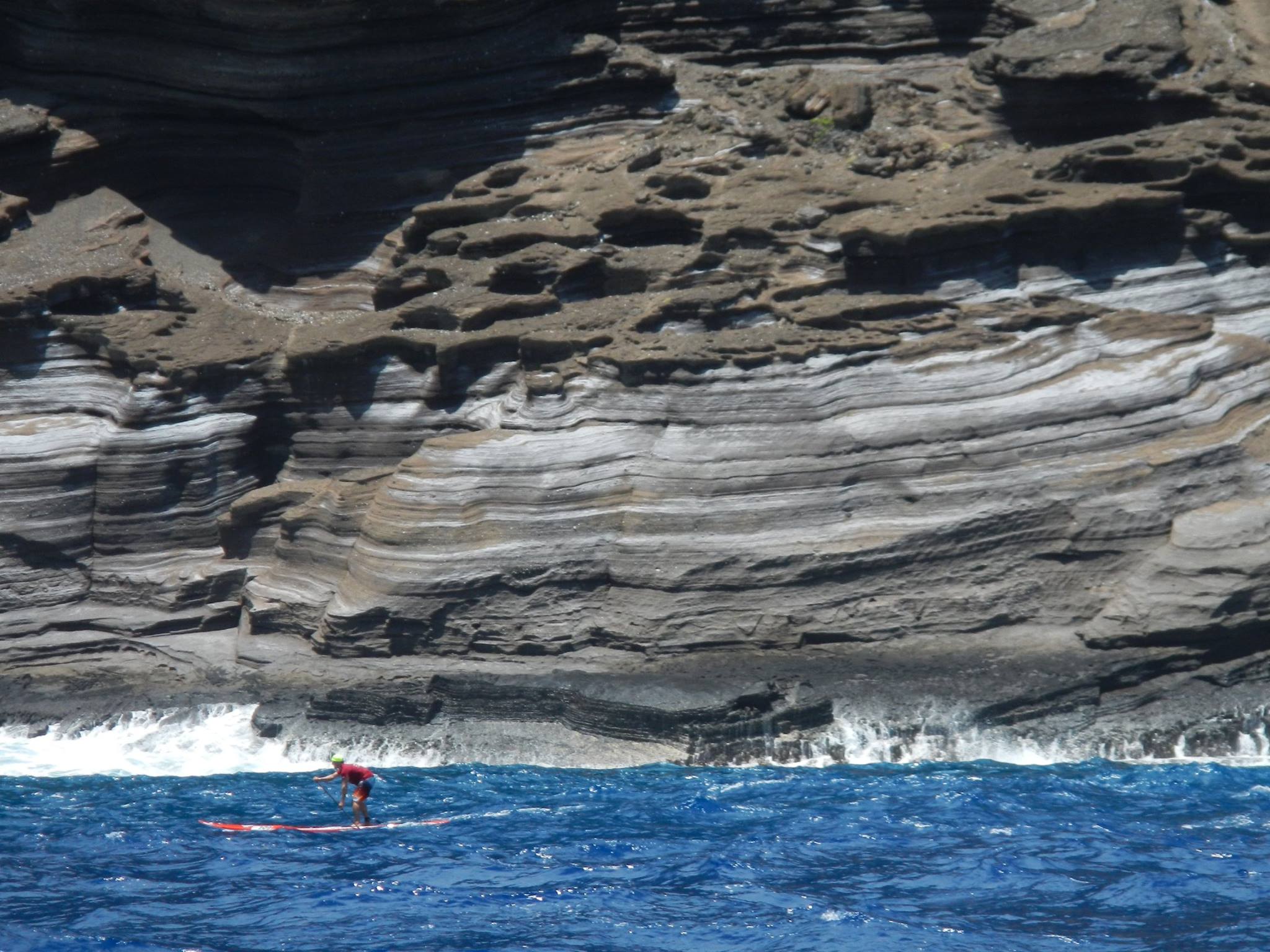
Rob Dies making his way past the China Wall

Rob Dies making his way past the China Wall

The hours flew by and they were at the China Wall and final legs of the race.  Rob Dies put the hammer down and pounded past the gnarliest area of the race. The changes came more often and before Steve realized it was his time to jump in, get on board and paddle to the finish.

We all watch events and the competitors launching toward the finish. Sometimes we wish that we were competing or accomplishing some long dreamed-of adventure. Imagine, if you can, the enormous wash of emotion, satisfaction, happiness and awe that had to encompass Steve as he made his way across the finish line for the team.  The journey had been long, and often seemed impossible.

A happy Steve Gates crossing the finish line for the team at M2O 2014

A happy Steve Gates crossing the finish line for the team at M2O 2014

From that day when simply standing was a challenge to this moment paddling strong across the M2O finish line. Steve was standing, tired and beat, but never beaten. Got a dream, got a goal? Think it is impossible? It’s there for you if you put your mind, heart, spirit and the support of friends and family into the mix. Now – GO FOR IT!


Travis Grant: Play Your Way to SUP Technique

tg3Waking up the day after the Naish Columbia Gorge Paddle Challenge 8-mile down wind event I had a very cool discovery. I was sore in different places than my  usual. I had adjusted my technique a bit and I think I think the pecs, abs and lat soreness were better than the usual fatigue.

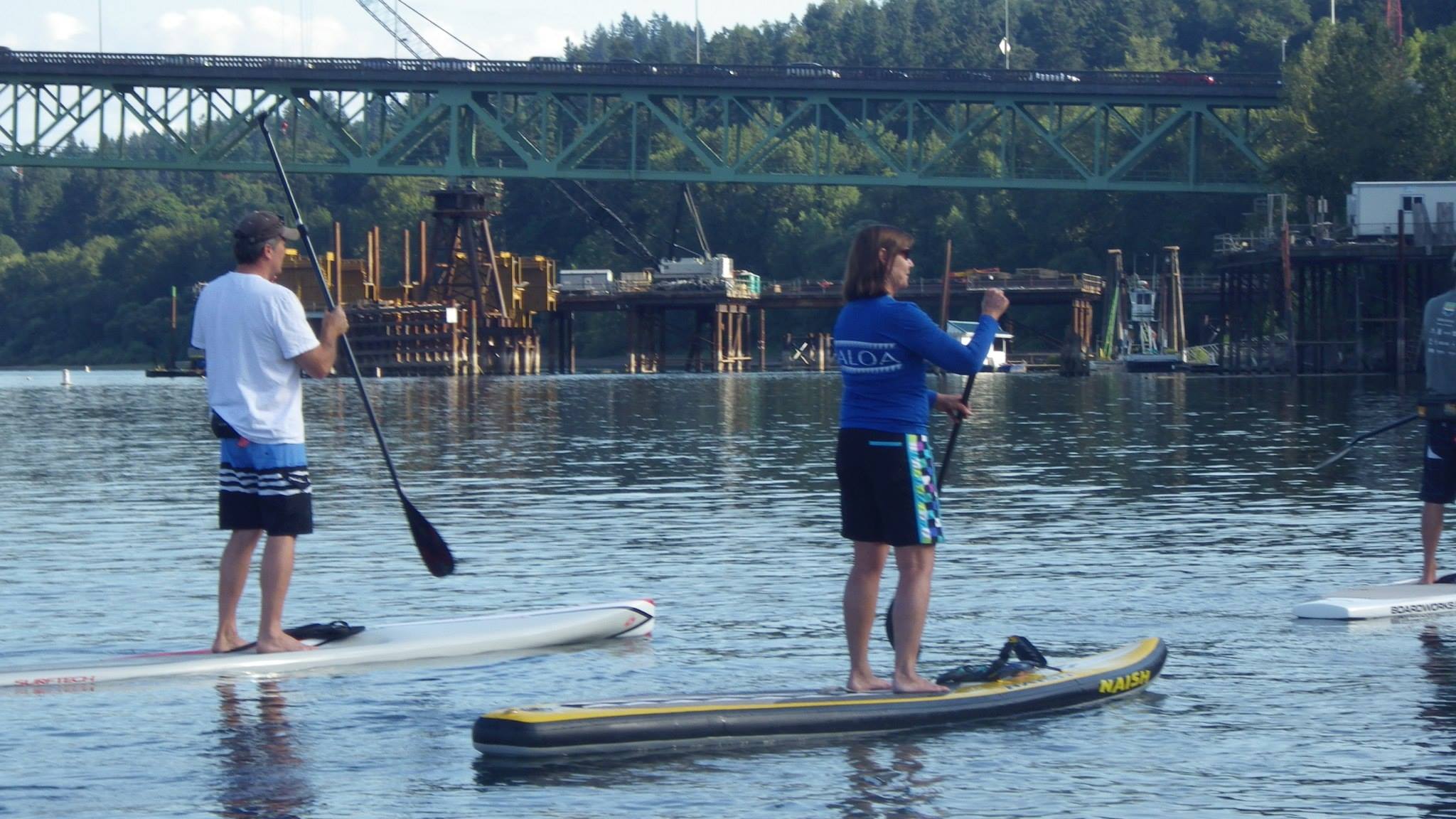
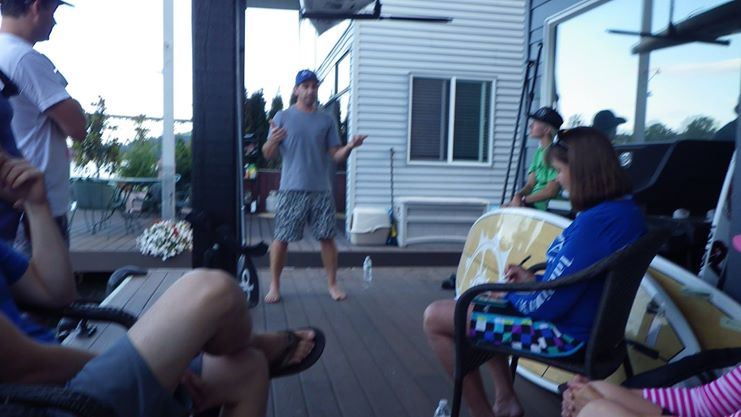
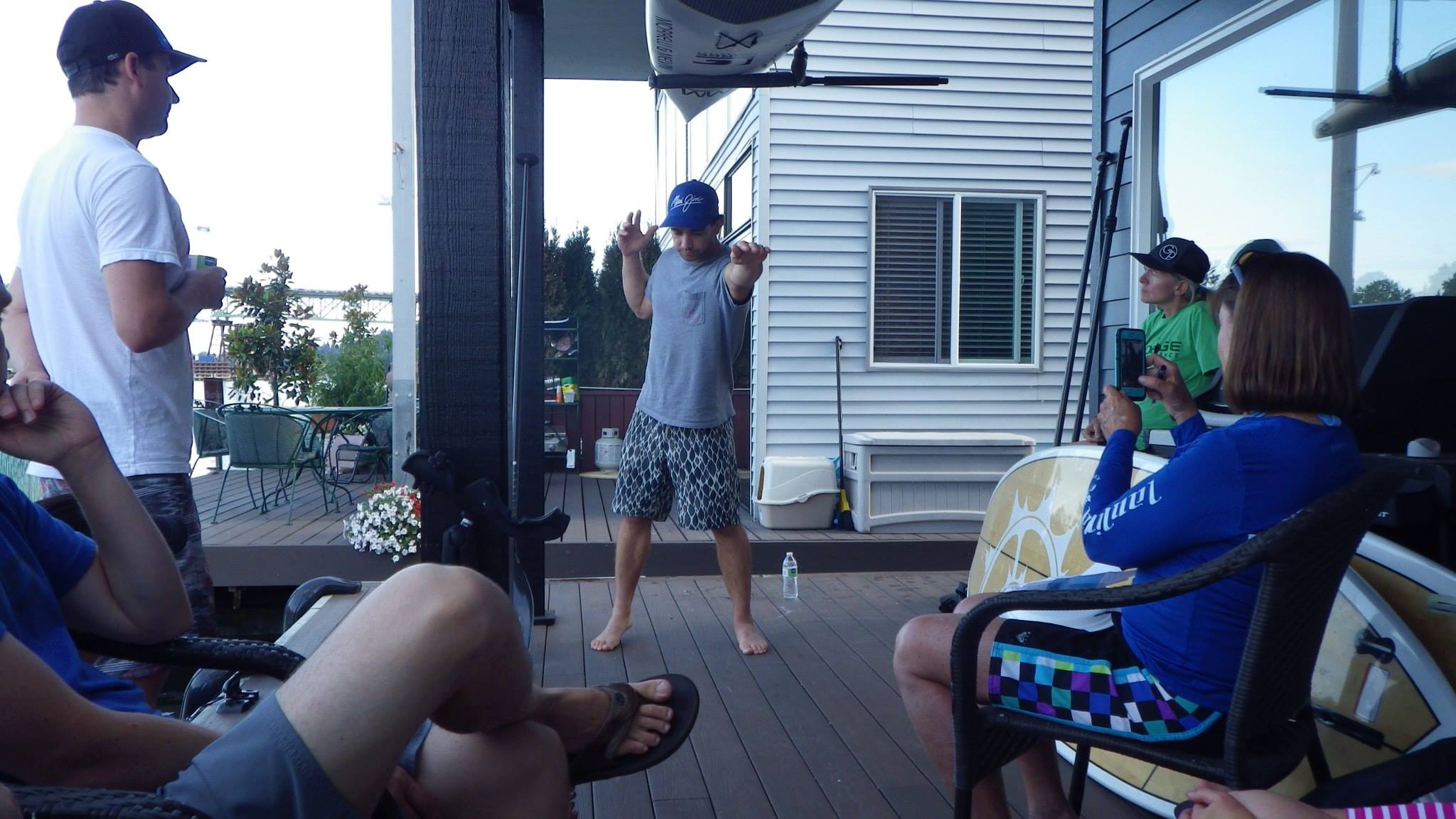
We had spent an evening a few days before the event learning a lot at a clinic given by Travis Grant on the Willamette River at the Gorge Performance site. Travis began by explaining how much outrigger paddling prepared him for success at SUP.tg2

The goal in standup paddling, as in outrigger paddling, is to be as efficient as possible. The result will be your ability to go faster, further and longer. By listening to your body and honing better technique you will be better able to paddle without injury.

tg4The Take-Aways: A few tips Travis shared that seemed to be what people needed to refine the most included:

1. Stand with feet facing forward in a wide stance. This gives more power, more balance and more stability.

2. Maintain soft knees that are ready to deliver power.

3. This was really valuable – “If you think of why you do what you do then technique changes make more sense.”  For instance, think of planting your paddle blade fully into the water. Think of it as being stuck in sand. You want to move the board forward, not pull the paddle past the board. By imaging the blade stuck in sand it is easier to image the forward driving motion delivered by body rotation and a strong core.tg1

4. Slow down to go faster – this means that if you must slow down to get your technique right, you will go faster in the long run. Part of this slow down is the opportunity to really engage your abs, your core, as you rotate your body with the paddle reach and catch. Keeping your core engaged through the return and you uncoil from that rotation allows you to derive your power from your larger muscles. Proper body mechanics will allow for your greatest reach and you most efficient stroke.

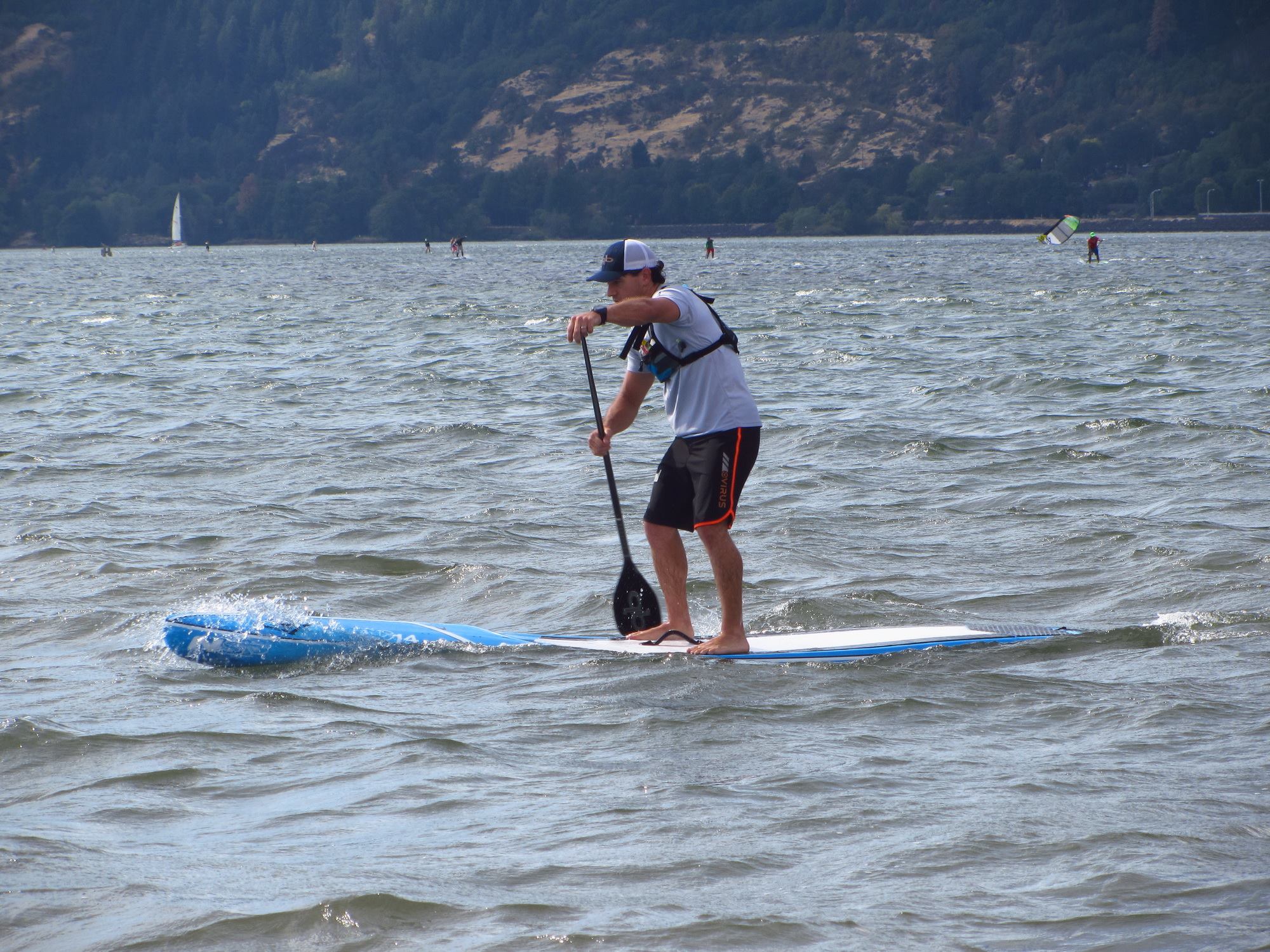
Travis Grant at the Naish Columbia Gorge Paddle Challenge - delivering speed, excitement and a whole lot of fun

Travis Grant at the Naish Columbia Gorge Paddle Challenge – delivering speed, excitement and a whole lot of fun

5. Above all, Travis seems to live a relaxed and playful approach to training, focus, excellence and teaching.

So when I woke up with soreness in my pecs, abs and glutes it was a huge, “Wooohooo!” Not only did I have a great down wind experience with plenty of speed and glides, my perceived exertion was so much less. I played at honing technique throughout the race – and love the results of the coaching from Travis grant. If you can make it to one of his clinics – do it! A video is a good way to get to know Travis (see below) but one on one water time with Travis at a clinic is worlds better!

Who Knew? Slower Can Be Faster

Super slow motion overview of technique by Dave Kalama

Super slow motion overview of technique by Dave Kalama

Conserving energy, maximizing stroke, honing effective technique. We all work on these a lot of the time if the number of articles and how-to videos out there are any evidence. When we can’t get to a clinic, it’s terrific to be able to access local coaching and online video tips.

Then it comes to getting on the water and paddling. Often, we prep for a race and discover that  we’re working our hardest and giving it all with high RPMs and effort – but it just doesn’t feel FAST!


Dave Kalama looking strong mid Ka'iwi Channel (photo by 808Photo.me)

Dave Kalama looking strong mid Ka’iwi Channel (photo by 808Photo.me)

Distressed Mullet recently posted a very short and “to the point” video with some tips from Dave Kalama (now just a few days after his 6th place solo finish in the 2014 M2O against paddlers 2-3 decades his junior – Yay Dave!) The video is below and well worth taking a couple of minute to internalize Dave’s simple, but not obvious, message. “Go slow to go fast.”

Dave Kalama: Keep it Fun & Keep On Going

dave-kalama-is-48_fe

Born in 1964, Dave trains, paddles, surfs, innovates and appreciates the waterman life to the max

Dave Kalama  has been around since day one of stand up paddling (literally) and has competed in the ocean for over 30 years. He consistently innovates and helps create the equipment he uses from boards to paddles – and he’s still got the passion, wonder, gratitude and sense of “awe” that creates a legend. It was an honor to chat with Dave recently. You’re gonna love his stories and perspective.

It started on Maui in 2012: If you have ever done a down wind run you know what I mean when I say – “Holy cow! What a rush. I want more!” With one down wind experience at the 2012 Naish Columbia Gorge Paddle Challenge under  my belt,  I headed to Maui for the Olukai Ho’olaule’a Fun Race.

dave waveAt the post race luau I was fortunate to find myself in line behind Dave Kalama who was chatting with friends, talking technique and sharing his expertise with a passion. Overhearing some tips I picked up information that fueled my journey to learn-learn-learn all I could over time. Over time following events, news, videos, training and Kalama Kamp adventures some “talk story” questions inspired this article.

We started on the topic of fitness which is relevant at the M2O approaches this Sunday.  Dave shared, “Fitness is accessible to all who are dedicated and willing to work for it. It’s an attainable part for those who are passionate and dedicated to their sport. Irregradless of skill, a person can be fit for an event.”

Dave explained further that in a down wind event there are so many other variables and factors in play. It’s like the most physical game of chess you’ll play. Your experience and decision making skills will ultimately drive your success. “You must make constant decisions based on what you think will happen based on your past experience.  A body of water being influenced by wind, swells, waves, currents and depth will look chaotic. You must learn to read the chaos as you ride, glide and connect to swells.”

Preparation and experience leads to down wind fun (Photo by 808Photo.me)

Preparation and experience leads to down wind fun (Photo by 808Photo.me)

A down wind run is a fluid situation that is constantly in flux. No wonder it takes enormous amounts of time on the water to learn the language. As Dave says, “The water is literally speaking a language, telling us what we need to know and we need to learn to recognize those cues.”

Every body of water interacts differently with wind waves. A gradual beach, a steep cliff, refraction off rocks, how bumps are moving, speed of the current and the depth of a river or lake all combine as the “language of water.” You don’t need to know how hydrodynamics works, but with awareness during your time on the water you will begin to understand that language.

With the upcoming Kalama Kamp at Hood River Oregon, Dave used the Columbia River of one example of how local knowledge and experience play into hearing the language the water is sharing, “Around Hood River the waves seem to criss-cross. You can notice that where the current is fastest (down stream and into the prevailing wind) the actual waves are slower. As the wave pattern horse shoes in the middle you can feel and see that the waves on the sides are faster.”

Speaking of Kalama Kamps (and register early because they seem to sell out) Dave injects his philosophy of fun into deep learning opportunities. He stays connected to each participant making sure that they get what they need and have plenty of “aha” moments. For Dave, the most satisfying part is hearing from people a few weeks after the camp when they have had some time to reflect on the experience. Such testimonials help Dave continue to hone the Kalama Kamp experience over time.

Keep motivated by finding the fun!

Keep motivated by finding the fun!

Dave explains, “I love teaching SUP technique and stroke but the most important thing is to deliver the information in a way that makes the whole experience fun. When I explain technique and specific movements I relate the movement to something a person might already know from life or other sports. That way things are familiar and they can adapt from a point of what they already understand.”

One of the reasons I was very compelled to interview Dave was the message he shared, from the heart, in a speech just before the 2014 Carolina Cup. (video below)

All of us havehad those moments when we thought we were:

    • Too tired or busy to complete a training we planned
    • Too overwhelmed, scared or beaten up by an event or race
    • Having a tough day and just wanted to quit

Kalama told a story of “his worst day on the water (video below) and how he turned that day (and his thinking) around by reflecting on a group of kids who managed to keep going in spite of the demands and struggles of Cystic Fibrosis. Thos kids didn’t have a choice of quittung when things got tough – they fought on every single day. Kalama closed his speech by saying his message was meant more for the racers who find themselves anywhere from the middle of the group, all the way to the back. He said, “You can always come up with good reasons to quit but no matter what, “you don’t get in the boat. You don’t quit. You keep going.”

A training run just this week as Dave prepared for the 2014 M2O reminded him not too take things so seriously that they were no longer fun. He said, “Just as I was pushing really hard and trying to go my fastest I remembered to take a moment, just a moment, to look around and appreciate where I was, what I was doing. I took those maybe 20 seconds, that was very cool. Then it was back to work!”

Kalama reminds us, “You don’t have to get the most or the best out of every day or every effort. It doesn’t matter what it takes, just keep going with what you planned to reach your goal. No matter what it takes – even if you have to crawl. If crawling is the best you can do, then crawl on and keep moving. Think about those who simply can’t give up – it’s motivating. When you leave the house to train or race you set a course, a plan or an intention. Honor it, finish it – and have fun!”

Stand Up Paddleboarding | Sunplay.com


Train Smart – Train Safe: Annabel Anderson

Annabel trains smart - and it shows. Photo © Ben Thouard :  - www.benthouard.com

Annabel Anderson trains smart – and it shows. Photo © Ben Thouard : – http://www.benthouard.com

That sound when the catch just doesn’t catch, that “gurgle.” That, “Ouch,” when your neck, traps, lower back or shoulder lets you know something is tight or off in your technique.

During standup paddling, as we work on technique, getting the “reach and catch” solid is a direct driver of our speed and power. While  a great coach and lots of water time can provide improvement, really refining the catch is a long term commitment. In order not to get bad habits, consistent feedback is a must.  When the feedback is discomfort or pain, you know you need some technique tweaking.

I FOLLOW many elite standup paddlers via their Facebook, blogs and the great publications that allow us to gain information. A recent interview with Annabel Anderson (Starboard) by SUP International was packed with exactly the sort of information we need to train smart and avoid injury. (Full article here)

Preparing for SUP demands with balanced training is key. © Ben Thouard :  - www.benthouard.com

Preparing for SUP demands with balanced training is key. © Ben Thouard : – http://www.benthouard.com

Harry at SUP International asked Annabel,Can you talk about signs symptoms that a paddler should look out for that would suggest they are over reaching?
By over reaching I am assuming you are meaning that the entry point of the blade is too far out in front? A stroke that does not engage power as soon as the blade touches the water may be suffering from ‘over reaching’. There are many different philosophies associated with perceived ‘stroke technique’ in this sport. Due to the lack of credible and biomechanically sound information people have sought refuge in references from the internet.

Annabel Anderson (Starboard) connects advice to experience - to our benefit

Annabel Anderson (Starboard) connects advice to experience – to our benefit

Annabel advises, “Be careful as to who you reference information from if it is from a free source. My suggestion is to ask yourself what and who the source is where the information is from. If you’re in pain or are feeling uncomfortable, something is likely not as it should be and if you continue to do it repetitively, you will do damage over time.”

Great insights – very relevant for me. How about you? Take the time to read the entire interview with Annabel . You might just save yourself from an injury and the resulting “down days.” Each step of the stroke is important and needs to be practiced.  Good reach and catch are important before applying the power.  A reputable and experienced coach and reliable online information can help us all train smart and reach our goals.


Molokai 2 Maui: Train with Peggy King

Peggy King has put in the training and downwind miles needed for the downwind racing season

Peggy King has put in the training and downwind miles needed for the downwind racing season (photo credit: Jeff Chang)

July 12, 2014 – Peggy King will be on the  starting line ready for the Maui to Molokai SUP race. This event, which begins in Honolua Bay, covers a stretch of water often described as “The Best Downwind Run On The Planet.” With her 60th birthday in the rear view mirror, Peggy King’s M2M training had been well-planned and solid. She feels ready for her second solos M2M.

We had a blast at the 2014 Olukai!

We had a blast at the 2014 Olukai!

I ran into Peggy at the start of the 2014 Olukai Ho’olaule’a. She looked fit and with 20 fewer pounds on her lean frame she was an inspiration to me! Curious about her training (and ready for some lean muscle and more endurance) I asked her to share some details.

Peggy King’s Training Summary:  My training for this event was planned and actually started way back in September of 2013. My main focus was on improving my overall fitness and accomplishing some weight loss( 20 lbs since July 13!) The strategy included attending classes at Crossfit Upcountry Maui 3-4x per week.

I am not a nutrition expert, I simply used common sense. For example, my diet plan began with the eradication of a favorite –  Triscuits and cheese. It was the start of a few habits changes that made a big difference. Diet was rounded out with meats,veggies fruits, and what we all know is important, less sugar, processed food, and alcohol. Portion control is the magic.  Athletes need water – so I was more conscious of that.

pk-hawaiikai1

Time on the water is Peggy’s favorite training routine (photo credit: Jeff Chang)

My XFit class formed a training base that I supplemented with SUP surfing, uphill walking with my dogs, and some double exercise sessions to mimic the time and intensity of  e what is required on a double Maliko Run.  It was important for me to include scheduled rest days! When I’m tired I overeat, am clumsy and risk getting hurt! Noooo! I do not want an injury.

Paddle season is upon us now- I did some of the Kahului Harbor circles in calm water- not fun! I am aiming for a double Maliko run at least 1 x per week. Since February, I have been doing downwinders to the Kahului Harbor(not just ending my Maliko runs at Kanaha) 4-5x per week.

Falling during the M2M not only wastes a lot of time, but also energy. Paddling upwind into a body of water in the nasty wind is important- and a skill required for M2O( I’m not doing that one!) and M2M.  After paddling 26 + miles of open ocean when you are tired it is necessary to have a solid base of skills and endurance.

Jeff Chang from the Wet Feet company took Peggy on the Hawaii Kai Run while she was on Oahu last week

Jeff Chang from the Wet Feet company took Peggy on the Hawaii Kai Run while she was on Oahu last week

Jeremy Riggs has helped me with my down-winding and paddling skills for 2+ years now,”being my chaperon” when conditions were really windy and nasty. As a result,my confidence has improved tremendously. I also sought out some wonderful coaching on my paddle stroke from David Kalama. I love and respect both these guys so much!

Since paddle/ downwind season has started, I’ve been challenged with the tiredness overeating/ training syndrome,but it’s getting better as my body adjusts to this workload! This is not easy for a 61 year old post menopausal broad like me.

I’m feeling both anxious and excited now as M2M approaches. I want to improve my time and qualify as a finisher sooo bad. They let me through last year at 5:34 although  I fell a lot the last 5 miles. I did a fair race. This means I didn’t cheat by going to my knees or sitting down.

I am much more prepared mentally and physically this year. Who knows what the conditions will bring. It could be light or 45 mph! I could be “yard sale” falling across the channel! I’d like to think with all my training and weight loss I’ll do better than that! Fingers crossed and hope for the best.”

We wish the same for you, Peggy!  (Note from Elder SUP- I have taken a clinic from Paddle with Riggs and you can too! Launches your skills to an entirely new level)


SUP Lessons from Seat 2

Timing and “The Catch”

That sound when the catch just doesn’t catch, that “gurgle.” Something about that sound screams, “Wrong!”

During standup paddling, as we work on technique, getting the catch solid is a direct driver of our speed and power. While  a great coach and lots of water time can provide improvement, really refining the catch is a long term commitment. In order not to get bad habits, consistent feedback is a must. When I train for standup paddle races and events I do my best to get the stroke right, but what is missing is a constant feedback loop so only my good technique and habits stick.

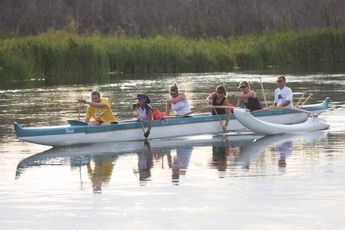
oc6-1When reach, the power stroke and a hasty return is perfect in timing, the feel and the sound is pure music and synchronicity. While we can practice these parts of the stroke while standup paddling, every aspect of our technique is even more easily analyzed while paddling with your team in an OC-6. A team provides feedback on so many levels: feel, tips and visual cues from others.

I have had the good fortune to paddle in Seat Two behind one of our more experienced team members, Lisa Jakubowski, as she brings us through a practice as stroke in Seat One. We don’t talk while training but recently she mentioned how she was trying to refine her stroke to avoid the “plunks” and “gurgles.” Being so close behind her, mimicking her style and technique, working on timing the best i could, I decided to work to eliminate the gurgle as well.

Focusing on the one thing was amazing. It began with watching her upper arm and shoulder as she moved through her power and return phase. As if we were connected, my upper arm/shoulder attached to hers. I began to get some solid timing, great for seat 4 and 6 to follow.

Next I matched her hip rotation, working to drive with my forward foot and hip at the exact same time that she did.  Mid way through our 10-mile training drills she mentioned, “When I really drive with my hip, rather than over – reaching with my upper body, I actually get an ideal amount of shoulder rotation. That results in a greater reach. I pause that nano-second at the reach then make sure i get a solid catch.” (Here is a great coaching video from KIALOA Paddles ‘Elele Luke Evslin – coaching Lisa Jakubowski. Thanks to Lisa for sharing it)

Lisa gave me a few tips on how to “feel” that perfect moment between momentum and power when the catch can be ideally executed. At that moment the canoe seems to be moving with exquisite smoothness. The paddle matches the speed of the boat. As I began the return with my paddle I gave a gentle punch with my lower arm. This momentum opened my joints  and stretched my muscles.

The energy of following the action of Lisa in front of me and the timing of the entire team in the canoe fed my ability to maintain speed, power and intensity as needed for all 4 laps of our 2.5 loop on the Deschutes River.

Luke Evslin demonstrates the REACH

Luke Evslin demonstrates the REACH

KIALOA Paddles ‘Elele Luke Evslin demonstrates the Catch