SUP: Da Feet

That moment after a too-steep take-off when the nose of your surfboard buries deep, that moment just before you rocket through the air tightly clutching your paddle – you know! You know that your feet were not in the ideal position to trim your board successfully – it’s obvious.
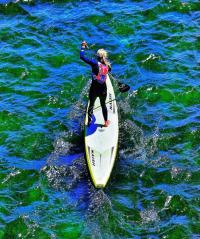
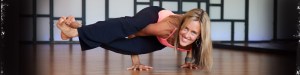
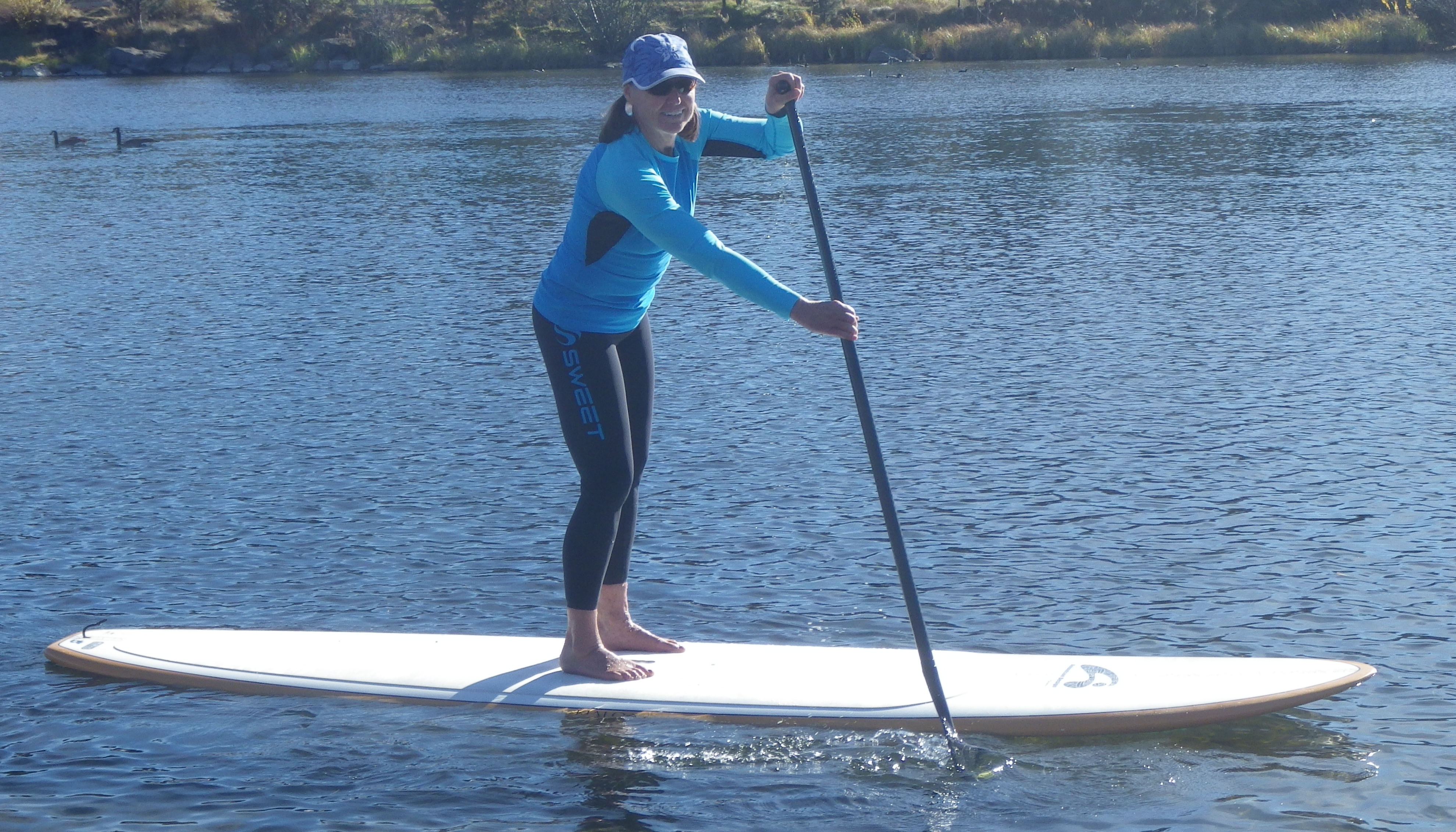
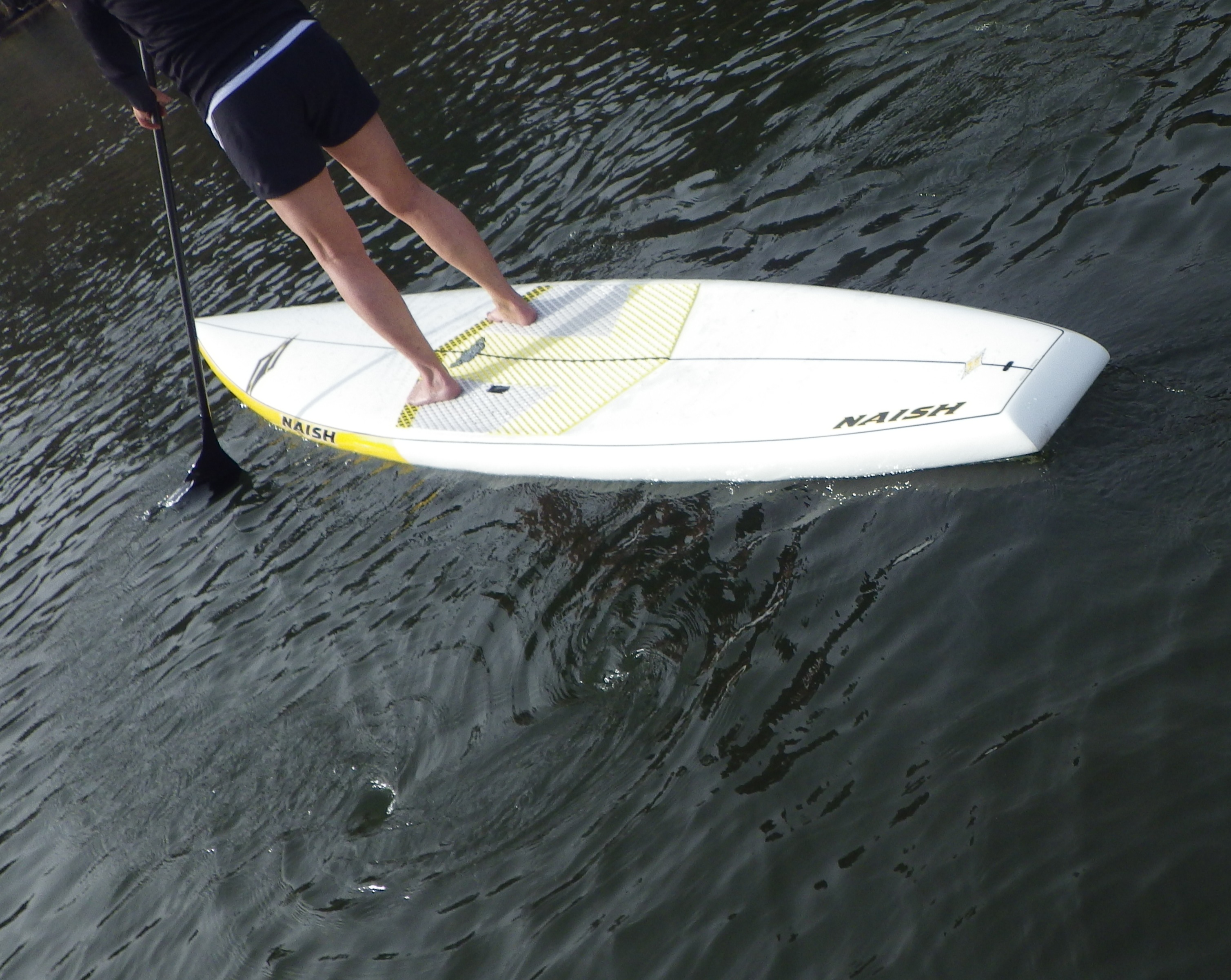
Karen Wrenn posted this very cool photo - great color and an easy way to study foot position and technique.

Karen Wrenn posted this very cool photo – great color and an easy way to study foot position and technique.

More subtle are the changes in board trim and efficiency or glide that occur with where your feet are place and the balance of weight on those two feet when going in flat-water or downwind. A good example is the way Karen Wrenn is positioned in the photo to the left. She was kind enough to explain, “If you notice how my feet are really far on the left side of the board… it’s because there was a super strong side wind coming over my left shoulder. I had to position myself on the far left of the board to keep from getting pushed by the wind to the left. With my body weight on the left side of the board it allowed me to get my left rail down and prevent getting pushed and tipped.”

Knowing the force of winds in the gnarly Columbia Gorge area where Karen spends a great deal of training time, that is good to know. As the weather warms, our local SUP community plan many jaunts to the Hood River and Portland area for down wind fun.

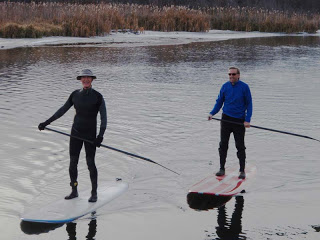
With just a few weeks before the most challenging down wind adventure of our lives at Maliko Gulch and the Olukai Ho’olaule’a, we have been barefooting it on the sleek 14′ Naish Glide as winter hiccups into spring.  Balance as we maneuver is crucial – falling into the barely above freezing Deschutes River is not an option.

There’s the rub! Tail turn practice goes tentative – and immediately balance becomes sketchy.  It’s a great mental practice to feel the right movement to position and coordinate strong paddle strokes.
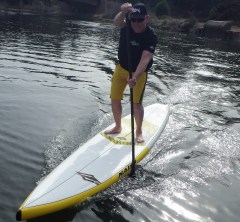
Evening light adding to our bliss!

Evening light adding to our bliss!

Our puzzle remains – what’s the best foot position for the various aspects of conditions we’ll encounter on the Maliko down wind route?  We will be sharing this post far and near, hoping for insights and input. While we will be participating in a “race,” our goal is safe completion of the journey.
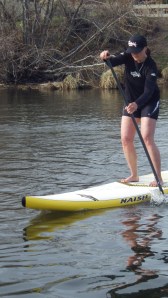
Wondering how this foot position is for strong "wind in the face" situations

Wondering how this foot position is for strong “wind in the face” situations
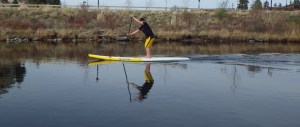
Ed is experimenting with feet further back, noticing the impact of the tail drag vs speed and efficiency

Ed is experimenting with feet further back, noticing the impact of the tail drag vs speed and efficiency

We know we have awesome equipment with our Naish 14′ Glides underfoot, so we hope to refine our skills so that we can make the best of the famed “glides” we’ll be earning along the way.  How incredibly cool is it going to be to feel that first rush of wind after going beyond the cliff at Maliko Gulch! What a thrill it’s going to be to be surrounded by hundreds of other paddlers as the swells start rising on our quarter and from directly behind!

Butterflies – yup! We can’t wait to practice in the warm ocean – to fall as often as needed into WARM water – and to peddle forwards and back along the foot-friendly deck of the Naish Glide.  The best and right equipment for the adventure adds so much confidence and fun to the mix! Yeah, the stoke is fueled.

Please share your insights and comments on the blog or via e-mail eldersup@gmail.com – some comments we have received so far can be read at Aloha of the Paddle.
This seems to be a good foot position for flat water up wind and down - comments?

This seems to be a good foot position for flat water up wind and down – comments?
It Takes a Village

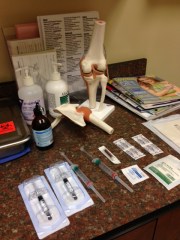
kneeAs March delivers more daylight and some warmer weather, we’re back on the water more often these days. Having survived this much of ski season with knees in pretty good shape, it was a surprise when I managed to make them sore when paddling. As a precaution, since a few meniscus surgeries indicate I have very little cushion and some arthritis in the old knees, I had some injectable medication called hyaluronan delivered. It is a once a week procedure over 3 weeks (ouch!)

Using some GoPro footage (which should be done again from the back-of-the-paddler view) I was able to share my technique with some experts kind enough to provide suggestions.  I tired out the very good advice from Karen Wrenn, Naish team rider,  over the weekend.  With knee braces on, a more narrow stance and full attention on keeping my torso rotation a bit higher toward the upper ribs I had a great time!  The entire process of awareness and concentration almost made me miss the awesome sun on water and mild breezes, but not quite.

Keeping my knees tracking more forward really seemed to make a difference in my ability to “drive power through the board” for consistent acceleration. Karen mentioned that I might expect more after exercise soreness in the upper ribs area when i was getting the rotation closer to what might be ideal. I can vouch for that – in a good way.

bridget

Bridget Fitzpatrick Evans joyfully shares yoga with us bright and early in the morning.

Even greater reinforcement of how a body could be gently nudged toward a new (and hopefully, better) technique came with my 6 am yoga class at Groove Yoga Bend this morning. We were going through our moving-breathing-meditation led by Bridget Evans and we were deep into Warrior Two when I noticed a light “coaching” toward moving hips to the side as arms pointed forward and back. With another barely noticeable touch, Bridget coaxed my thigh to bend just a bit more toward parallel with the ground – and “LIGHT BULB!”

It might have been 1/16th of an inch more of a torso rotation, but I caught a twinge of that upper rib exertion from the paddling and my hips moved a bit more – and there was the reminder. If patience and awareness team up, even a tough old body can learn to move in new (and more effective) ways.  A little shaky and really sweaty insight.

Later as we moved into single pigeon, I babied my left knee and did a variation on my back. My cooler and healthier right knee found its way into the pose a bit easier.  Breathing in and then breathing out and deepening the pose I was feeling really good about how it was all settling in. Maybe Bridget noticed some tense areas that were holding me back – who knows. Whatever, she appeared at just the right time and managed to relax some large back muscles, some teeny neck muscles and gently coax a bit more deepening of the stretch.  Wow! it was such an easy transition, and reinforced hope.

Consistent practice and listening to one’s own body – partnered with professional advice – can make training an adventure and a journey.  I guess the take away is paying attention – what do you think?  We welcome your comments, e-mail and insights.

Sports Imaging: Stehlik Glides

About 18 months ago we visited Oahu and were fortunate to discover Blue Planet, an SUP center just a few miles from Waikiki. Blue Planet is owned by Robert Stehlik, a talented paddler consistently sharing his time and expertise to all levels – from rank beginner to the downwind experts. We had a great time at one of the many free clinics he offers and loved trying out race boards for the first time in 2011.


Robert Stehlik of Blue Planet has a wealth of open ocean crossings as the foundation for teaching others.

Robert Stehlik of Blue Planet has a wealth of open ocean crossings as the foundation for teaching others.

Robert Stehlik combined his talent with a GoPro video and decided to  paddle the Hawaii Kai downwind run on Oahu while narrating it. With a summer full of all sorts of downwind runs (with the Wickiup in Central Oregon coming up soon) we decided to take some time to really study Robert’s videos.  It is really insightful to hear the coaching tips and tricks as he is actually doing them.

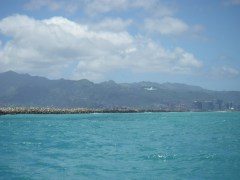
Wide open downwind spaces - heading toward Waikiki

Wide open downwind spaces – heading toward Waikiki

While the tips on paddle cadence were definitely valuable, the tips on reading waves and increasing the opportunities to ride glides both left and right really hit home.

I absolutely agree with Robert when he says, “Downwind runs are exciting and fun.   In the surf, you are often waiting for a set or your turn to catch the next wave.  On a downwinder, there are no crowds, you have long windswells that stretch across the whole ocean to play with, you are always on the move, going from one glide to the next, surfing the bumps.

Plan ahead, know the waters, route and weather before heading out on a downwinder.

Plan ahead, know the waters, route and weather before heading out on a downwinder.

There is no doubt that doing any length downwinder requires preparation, planning, a partner and the appropriate safety gear.  The pre-downwinder prep including balance training, awareness and a depth of open water experience can make all the difference in the experience.
Robert advises, “It can also be dangerous to head out into the open ocean unprepared, so make sure you know what you are getting yourself into.
I enjoy sharing what I have learned and have been offering coaching to paddlers that want to experience the joy of downwind paddling.   For more information on SUP lessons and coaching offered by Blue Planet, please visit the website for more information.


Vancouver Island SUP Adventures

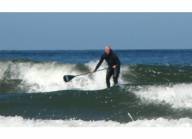
Sweet surfing off Tonfino (Vancouver Island, BC)

Sweet surfing off Tofino (Vancouver Island, BC)

If you have ever hopped off the ferry to Victoria, Nanaimo or any of the other stops along the coast of Vancouver Island you had to be craving some paddle time on the water.  Back in 2008, we did a “first crossing” in Clayquot Sound where local First Nation and kayak tour groups cheered and waved and asked a boatload of questions (What is that called? for the most part, then “Where can I get a board?”)

Awesome paddle in Clayquot Sound )beware of tides and currents!)

Awesome paddle in Clayquot Sound (beware of tides and currents!)

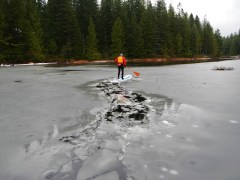
I recently spotted a picture posted on Facebook of a beautiful scenic river, partially frozen, with a long, glassy wake through crusted ice made by a guy on a standup paddleboard.  As luck would have it, I was able to connect with Paul Kendrick who created the scene via a great photo. The intrepid paddler cutting through the icy river was Paul’s friend, Darcy. If you are compelled to bundle up and paddle in winter, be safe and stay warm.

Winter SUP - paddle with a buddy and wear proper clothing (then take in the awesomeness!)

Winter SUP – paddle with a buddy and wear proper clothing (then take in the awesomeness!)

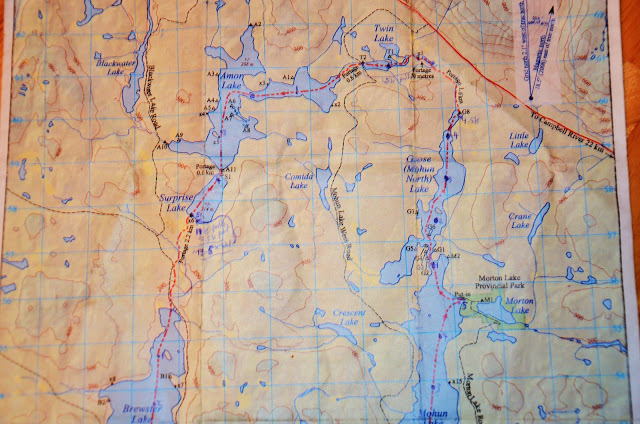
If you are intrigued by the idea of 12 lakes connected by easy portages, be sure to read this article as Paul describes his favorite rivers and lakes from the SUP Perspective.

Paul is relatively new to the sport, he bought his first stand-up-paddleboard in July 2012. A fan of both awesome adventure scenery and good exercise, it didn’t take Paul long to master the art of “boardpacking.”

What’s boardpacking? It’s a term I coined to explain how wonderful “backpacking via SUP” can be.

The area of Vancouver Island where SUP explorer Paul Kendrick adventures with his standup paddleboard and camera.

The area of Vancouver Island where SUP explorer Paul Kendrick adventures with his standup paddleboard and camera.

Paul has likely done quite a number of first crossings, as there are so few  up in his area exploring on paddleboards, Paul has a blog that’s informative and a very good read.

According to Pau, “I started this blog as a means of sharing and invitation for those who may be interested.We are so lucky to live in this very special part of the world, so let’s get out there!”

After touring the log, I am hankering to toss a few boards on the roof of the truck and head on up to Vancouver Island. Who else has some BC adventures to share?

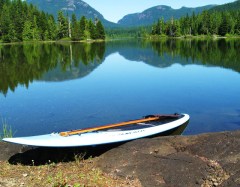
Pristine launch spot from Paul's Paddling blog

Pristine launch spot from Paul’s Paddling blog

Winter SUP Training

January warm in my Sweet Waterwear paddling top and compression pants

January warm in my Sweet Waterwear paddling top and compression pants

Just took a virtual tour drooling over the Naish line of Glide raceboards (have you ever seen that GX? Yeah!)and Mana line of SUP surfboards.  It seems like forever until we head to Maui for some surf and downwind fun at the Olukai Ho’olaulea.  In reality, it’s just about 100 days.  With so much snow and ice on our local paddling locations, we are waiting until late May to get our Naish boards. Meanwhile we prep and dream. I did have the pleasure of going a few miles in the Deschutes River on a recent 50 degree afternoon. It was the first time I’d paddled since our fun in Maui in early December. Other locals, like Randall Barna paddle regularly – every freezing month of the year. naish randall winter

I was paddling on my Amundson 11’3″ all round fun board.  Everyone knows that I have had endless hours of flatwater and surf fun with that board.  Heading up river on a calm day I was surprised to notice – my Amundson just didn’t have that “glide!” In Maui we had been blessed with a few glassy days with small surf so the actual glide of the Naish 14′ Glide was obvious. A set of 6-8 strokes on one side generated some serious acceleration with minimal effort.  It reminded me of some technique suggestions from KIALOA paddles’ Dave Chun.

When asked about paddling technique, Dave Chun says, “Listen to the board, Don’t worry about what you look like. Listen to the water coming off of it. Feel what makes it go fast and smooth.” I was doping that observation during my January paddle and realized how much the design of a board impacts the glide, the sound and the result of a series of paddle strokes.  Even though I love the sound of the chop-chop-chop as the bow skims across the ripples in river current and breeze bumps, having aboard that slices right through all that with more of a “swish” is simply faster! So glad we’ve got a 14′ Naish Glide reserved for the Ho’olaule’a.

We don't have the beach (and I certainly don't have the body) but we can train and prep with guidance from Suzie Cooney, CPT

We don’t have the beach (and I certainly don’t have the body) but we can train and prep with guidance from Suzie Cooney, CPT

While a great board is key to having a great experience during SUP events, the bottom line is getting ourselves ready to be strong, safe and prepared for the physical and mental challenges. To that end we have been poring over Suzie Cooney’s SuzieTrainsMaui website for ideas and training tips. Luckily she has SKYPE sessions available for some true custom training opportunity. I know we will be filming some sessions with the GoPro to get solid feedback that we need.

Since Karen Wrenn experiences much similar winter weather we looked for some training tips that power her fitness and competitive success.  This is from Karen’s blog with a link to Stand Up Paddle Annapolis’ blog

“I do a lot of cross training in the gym in the Winter. Circuit training is great because you can get your heart rate going, build muscle and muscle endurance. I will first do something that elevates my heart rate followed by a couple exercises that include strength and balance. For example, I might do 20 double jumps (or you could do 100-150 single jumps) with a jump rope and then move right into 20 kettle ball swings (from a squat position swinging the kettle ball to shoulder height coming to a standing position) and repeat. Then I would move into a plank position with elbows on a ball and roll the ball forward and back for 20 reps. I would do this circuit 3 times and then move on to another circuit.

Another idea of a circuit is to do 15 split jumps on each leg (http://www.livestrong.com/video/5310-split-jumps/) and then 20 tri-cep dips then 20 reverse crunches (http://www.youtube.com/watch?v=vVVlXA0dqGg) and repeat this circuit another two times.

Basically, come up with some circuits of three exercises. Have the first exercise of the series be something that will elevate your heart rate ( jump rope, running stairs, sprints on a rowing machine) add a strength exercise (kettle bells, push ups, tricep dips, pull ups, etc…) then add in a core exercise ( reverse crunch, plank, medicine ball sit up and throws). After you finish one circuit of three then move on to another.

I run a lot during the Winter. Running is a great way to keep up your cardio endurance and a great thing to do if you only have 45 minutes to spare. If you are not a runner… biking and swimming are great options too.”

From Naish Stand Up Paddle's Facebook page

From Naish Stand Up Paddle’s Facebook page

Excuses for not getting ready? NONE! Have fun, just be sure to be safe and paddle with a buddy when the water and weather is cold.

GoPro – No Need to Be a Pro

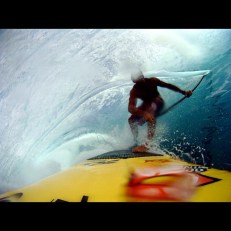
Chuck Patterson, early GoPro sample of awesome! This is at Teahupoo

Chuck Patterson, early GoPro sample of awesome! This is at Teahupoo

The best thing about the relatively lame minutes of edited footage I have been gathering from our last SUP vacation is that they were just that – relatively lame. Sure, I’d love to produce the absolute awesome-ness that someone like Chuck Patterson shares – but it just ain’t gonna happen in this lifetime. (Follow Chuck on Facebook to stay current on his GoPro Hero 3 projects) No matter!

OLur GoPro Hero 3 captured the fun, for sure! In our minds we were charging sets like maniacs, drenching our senses in incredible sights as we paddled long runs in West Maui and experienced cool wipeouts. Like most “my vacation” videos, the footage left a lot to be desired. So, why are we so jazzed about the GoPro?

The Go Pro Hero 3 came along like an unobtrusive buddy, joining in on all the fun and easily capturing the images. Once home, because we can edit out slices of the footage with ease using the free CineForm Studio software, the fun began. Rather than sequestering myself away in my office, nose to the editing grindstone, editing the GoPro footage is good group fun. (Warning: Be sure you have a thick skin. The great stance you believe you display while catching that thigh high swell may seem absolutely hysterical to your kids).

But that’s the point. Seriously, who wants to see a regular “SUP Joe” riding a wave. You are the only viewer for which that experience is incredible. But that funky stance and maybe a few wipeouts later you could have fodder for a short film friends and family will enjoy – and maybe even share. be bold!

So yesterday I sat with a beer (Deschutes Brewery Jubelale, if you’re wondering) and our daughter, son-in-law and my husband, Ed for an editing session.  I watched them watch the clips I had made with the CineForm Studio software. Yup! They found many things hysterical.  We labeled those clips and added them to the “media bin” in the Sony Movie Studio software I had. That software is not exceptional, I just happened to have it. Many people enjoy using iMovie or even Windows Movie Maker. Premeir is also another choice – we’d love to hear what you use for your final film.

Back to our editing fun. We took one wave that was Ed’s favorite and sliced sections of it to play over and over in 5 second repeats. “Ooooh, cool, ” our editing team replied. Then we took a smooth off the tail wipeout that was relatively nondescript and played it about 6 times in a row. It brought a chuckle every time. The resulting one minute 45 second clip was much cooler than the raw footage. With music added it became even more fun.

The point is- without the ease of the GoPro easily fastened to our chest or to our boards we wouldn’t have had any video at all. Instead, we had a great family gathering creating a video project instead of dozing while watching the full (gotta admit it) boring raw footage. I am pretty lame at music, but my son-in-law, Joe, and daughter are great at remembering pieces that might fit well in our SUP films. They promise to share a playlist. The whole experience is cool – and the learning curve is absolutely part of the fun if you play it that way.

Do we have that sweet 20 minute “my vacation” action film? Nope! But after the first view, who watches them anyway. Go get a GoPro and see how much fun reviewing and editing can be. If your editing team laughs at your “talent,” buck up, get a thick skin and be sure to add that to your final project. That’s part of the audience fun and who knows, you might go viral.

What editing software do you like? What have you posted online? What’s your favorite online platform? Share a link to your best effort GoPro film – we’d love to see it.

Gotta Get a Glide (Go Naish)

The Journey to Maliko Gulch continues. We have been posting numerous articles since October 2012 documenting the on land training routine two 63 year-olds are following in order to be physically ready for the demands of the Olukai Ho’olaule’a race from Maliko Gulch to Kanaha. No matter how much land training we do,  water time with the right equipment is crucial.

Right now we own three standup surfboards (an 11’6″, a 10’6″ and an 11’3″). With winter closing in on our home town, water time on the snow-closed lakes is over. We can still paddle the quick-moving Deschutes River in temps above 35. Below that, ice on the deck pad (not to mention in the river) makes a SUP run less than desirable.

Fortunately, we managed to save for a trip to Maui the first week of December (Happy Birthday, Ed and Merry Christmas to us both!). Our plan was to get some time doing down wind and some glide-training using the Naish 14′ Glide GS and the Glide 14’0 GX.

Both of the 14’0″ Glides feature a low rocker displacement bow and a flat rocker bottom shape to increase acceleration with each paddle stroke. I am not the strongest paddler in any mix so when I get my technique as right as possible I want maximum ZOOM from the effort.  Reading about increased acceleration with each stroke in one thing, putting together 10-20 paddle strokes that seem easier and more power-producing with each return – now that’s ZOOM!

Happy times in Maui with Naish Glide 14'0 GS and GX

Happy times in Maui with Naish Glide 14’0 GS and GX

Maui is one windy place. Between the swells and the wind chop, I had some trepidation about going a long ocean distance on a race board with 27 1/4″ width.  Standing still in wind chop did require a nice deep flex of the legs and a paddle in the water for stability. But once I got a rhythm going I was jazzed by how stable the Glide was.  According to the description page on the Naish website, “The recessed deck provides a lower center of effort for stability to increase paddle power and gliding distance.” I’m glad the Naish designers got it right.  The result is a ton of fun and very confidence-building.

The Glide 14’0 GX features a carbon construction with wood reinforcement in the stance area. My experience and ability to perceive nuances between the Glide GS and the Glide GX is minimal.  The carbon construction of the Glide GX really became dear to my heart when I lifted it for a carry up the beach or to load onto the roof racks. That GX is well-balanced and light. the hand-hold grip in the deck is set off center. I tried carrying with the grip high and then with it toward the low side. The low side worked well for my arm length – and the board carried so easily.

The easy-to-manage feature of the Glide GX is just one reason to give the board a try.  We all look at our budget and price during the decision-making process when it comes to adding boards to our quiver. The more I try and the more I learn, the “big picture” of function-fun-value has become the primary decision-driver.

Okay, now for the high point of the first day on the Glide 14’0.  At the halfway point of our 8 mile paddle, we were at a break called Rainbows off West Maui. The wind was relatively low and a swell of glassy, waist-high waves was charging toward a shelf reef at mid tide. It was a brilliantly clear mix of sea, sky and surf. I turned the Glide toward shore and waited for the second wave of the set. Paddling hard, I felt the Glide engage in the wave and before I knew it I was surfing sweetly toward shore. Stable as anything, I rode that small wall to the right until it began to fold into more turbulent foam. Uh oh, I was not on a surfboard and no amount of wishing was going to give me a bottom turn to the left. I bailed out far enough from the reef to be safe.

Exhilaration! I know that when I’m on a down-winder with the Glide 14 I’ll be able to do what its name suggests: catch and connect the glides.  And that’s what its all about!

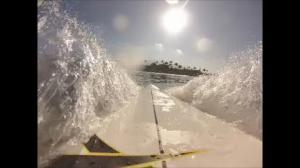
View from the nose - first wave caught on the Naish Glide GX 14'

View from the nose – first wave caught on the Naish Glide GX 14′

For a short video via GoPro: Disclaimer, it was my first day filming and first try at editing. Fun but not for prime time!

Crush on a Hero (GoPro)

There was a time when golf was not a televised sport. Logic had it that watching a bunch of golfers whack a little white ball around a golf course, no matter how beautiful the course, would not be entertaining. Millions of rabid viewers later, the power of a great story woven into well shot images made all the difference.  We engage with diverse characters (pros) developed across their careers whether we play or not. Watching golf is adventure and drama when the story and filming is exceptional.

With the amazing digital and video tools available we have a chance to “film life.” We can see the images and become engaged in stories of all types created by pros-and people just like us. As in golf, some are going to gain a huge audience – others, not so much. For example, put the best set of golf clubs in my hands and bring the best video team on site to film my round of 18 holes, no one would care to watch. There’s no way I could deliver the shots or drama viewers need.

Similarly, I actually do own “the best” in equipment – the GoPro. Based on my skills and needs I selected the HERO3 Silver Edition. Armed with chest mount and surfboard mount I set off to document an 8 mile flatwater paddle down the incredibly beautiful coast of west Maui for my first Go Pro experience.  Ed and I took off, taking turns paddling the Naish Glide GS 14 where we’d mounted the GoPro surfboard mount.

The best equipment can’t counter boring footage and inexperience. We had a chest strap to mount the GoPro – but didn’t use it. The surfboard mount can be turned to face the surfer – we didn’t do that. We aimed the GoPro forward and simply let it run for 90 straight minutes of mostly downwind paddling.  The Go Pro Cineform Studio software is easily learned, even by a techno-phobe like me.  Thanks to lots of YouTube and online experts sharing insights every question that came to mind had an easy to access answer. All of that couldn’t make up for my relatively boring footage and lame editing skills.

View from the nose - first wave caught on the Naish Glide GX 14'

View from the nose – first wave caught on the Naish Glide GX 14′

Do I mind? Not really. No matter what, I have documentation of that very first, massively exhilarating ride I got on a chest high glassy wave on the Naish 14′ Glide GX in the few seconds before I bailed out. It was nearly dead low tide and a reef loomed too close to the surface. Editing that first set of Go Pro footage is the start of a cool new hobby. Priceless – and day one on my learning curve.

http://www.youtube.com/watch?v=gSAMUtUhfoc&feature=youtu.be

The Power of the Feather: HULU

Hulu means feather in Hawaiian. We sometimes leap to compare a feather with “light as a feather,” but that would ignore other powerful components of a feather. Birds’ feathers are designed to be light but very strong, tough and flexible. Feathers are some of the lightest but strongest materials in nature. When Dave Chun of KIALOA Paddles named the newest in the KIALOA line of paddles the Hulu, the name was an immediate fit.

Before going into detail  about the Hulu line, I’d like to share some bits from a recent conversation I had with Dave in his Bend, Oregon office.  An avid student of nature, water, paddling, observation and the “wisdom of crowds,” Dave provided some fascinating background around his journey toward understanding what creates great paddle design.

While outrigger canoe paddling is the sport of choice for Dave, he has spent a substantial amount of time underwater. It’s not uncommon to spot Dave neck deep in water at a crucial buoy in a race where he’s grabbing some cool action shots. But it’s not such common knowledge that Dave spent many years deep in the ocean spear fishing and designing spears.

It was in that environment that a super-creative, full-of-ideas guy like Dave began to recognize the value of slowing down and being calm. Instead of going fast and chasing a fish, Dave realized that hovering low and quiet by the smaller tropical fish would eventually draw in the larger game fish.  The same would happen when a myriad of ideas tumbled in his head – simply slowing down and being quiet would allow the best ideas to flow into consciousness. 

Experiences in spear fishing allowed Dave to become quite competent at designing spearguns. Years of experience in the world of outrigger paddling also allowed Dave to learn from the bottom, putting real experience to use in developing unique and highly effective paddles. There was no “school of paddle design” or books to read at the time, so Dave’s path to refining his skills to the digital and highly refined level they are now did not include engineering or degrees.

Dave’s formal training was in social work. At first glance there would seem to be little connection between excellent skill for social work and transfer to paddle design. Here is where the “wisdom of crowds” comes into play.   As a social worker, Dave was keen to really listen to what his clients were saying. He encouraged story-telling and let people weave the tales they wanted to share. In almost every case, somewhere deep in a story a nugget of important information would be shared – and Dave honed his listening skills over time.

Instead of doing formal “market study” and test groups, Dave refines designs by getting KIALOA paddles in the hands of diverse types of paddlers. After trying the paddles people tell the story of their experience, sharing things they felt, saw, thought about, wanted, liked or disliked. The “wisdom of crowds,” from the top paddlers, racers, surfers and pros to the everyday paddler all contribute to a distinct line of versatile KIALOA paddles.

The majority of the testing for the Hulu happened in the Pacific Northwest so KIALOA could keep the paddle project on the down low. Karen Wrenn and Cyril Burguiere in Portland, and Beau Whitehead in Bellingham all had prototypes of the Hulu out for a spin. Chuck Patterson was used later in the project as a strength tester – who better?

Chuck with an earlier KIALOA paddle – looking strong as usual.

According to Dave, “Much of the testing was focused on the strength to weight ratio. We wanted the paddle as light as possible, but we did not want to build a ‘disposable’ race item. Our goal is to keep our product out of the landfills. Since we work with plastics, a long service life for our products is necessary. I feel a super light paddle which is disposable is irresponsible.”

Dave explained further, “The Hulu features a brand new shaft, called CST. It currently is available in 2 versions. Light and Ultra Light. The shafts are built with pre-impregnated carbon fiber and are oval in cross section. The system we used to build the shaft is proprietary to KIALOA. The Hulus are our lightest SUP paddles. Some of our racers converted 100% of the time to the Hulu. Others use it as part of a quiver. But most have adopted it as their default paddle. The Hulu is designed to be a race paddle specific to the unique structural demands of racing.“

Personally, I am so eager to get my Hulu paddle that I can barely wait until the January 1 launch date.  I am an “everyday” paddler, far from being either elite or top ranking in any venue.  The need to have the best tool for the job (go straight and go fast) that racers want is not less important for us “everyman” paddlers. The Hulu is just right for me (and you, and your best friend, and Chuck and Gerry and Cyril and on and on).

 Dave and his good friend, Gerry Lopez, work in close proximity. (Be sure to check out the video link) It’s natural for them to check in with each other on a pretty much daily basis. As the Hulu evolved, Gerry’s ideas connected with Dave’s and the paddle became a collaboration of input.  The light sharp edges providing a clean entry and a stiffness ideal for maximum energy transfer made for the pure purpose of the paddle as a race paddle.

As we were talking, Dave reached over to a line of paddles leaning against the wall and pulled out one of the most stunning paddles I’d seen (this from someone hooked on the Hinano and Plumeria designs of the Pipes and Methane).

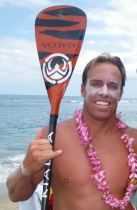
Dave held out the Hulu Ultralight GL model, GL for Gerry Lopez, for me to see. WOW! Gerry’s name is signed in his trademark script below the logo we all recognize. In bold black and gold colors, the paddle is a work of art. Dave has taken years of ideas and concepts that buzz around in his creative mind, he tempered the ideas with “wisdom” from crowds and from his good friend, Gerry. Hands on digital refinement and observing from experience, life and other pursuits collectively aligned to  result in the Hulu. Focus on using the newest in high grade carbon fibers with a high modulus of elasticity connected to a willingness to try, fail and re-design has brought Dave to the point where he is confident to launch the Hulu. For one, I am jazzed.

Connect with KIALOA or a dealer in your area.  Your Hulu is ready.

Gray November to Sunshine SUP

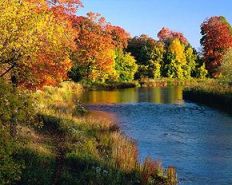
Fall colors invited plenty of Elder SUP paddlers out on the water to collect those rare sunshine days of brilliance

After five days of unbelievable Indian summer sunshine and 60-78 degree ranges in temperature, the gray (bring some snow to Mt Bachelor) days of November have returned. We had some serious frost for a few weeks in October which turned our leaves a brilliant array of color. A number of you shared pictures and e-mails describing how cool it was. We featured some photos by Dennis Oliphant of Sun Country Tours in Bend, Oregon.

With the forecast predicting highs in the mid-40’s, rain and possibly snow flurries at high elevation, the long darkness of winter seems daunting. Yes, we love to ski and play in the fluffy white stuff – but when standup paddling and water fun is #1, we start to think warm!

I spotted  this picture on a Facebook page today (sorry, I cannot locate the source). This amazing warm, tropical spot is incredibly compelling – yes, I wish I knew where it was so I could add it to my bucket list! How about you? 

Soon after I spotted that image, I followed a few Facebook posts from Sean Sweet of Sweet Waterwear and that lead to a few posts by the gracious and incredible Candice Appleby. Candice recently won the Hennessy’s SUP and Paddleboard Racing series for 2012. After getting 1st in the Elite Course Race and 2nd in Distance, she was crowned the Hennessey’s World SUP Champion for the 3rd time.

When the string of amazing performances Candice has accomplished in the most competitive events in standup paddling racing and surfing it’s likely that she spends enormous  amounts of time in diverse training and water practice. Many of us relegated to the colder climes for the next 5-6 months might breathe a heavy sigh and wish for those tropical waters.

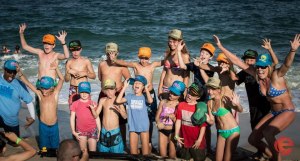
Candice Appleby and some of the kids in the kids clinic – Los Cabos Classic Hennessey’s SUP and Paddleboard Race Series

There is an alternative, a way of creating a diverse experience around our SUP.  Off water training and other outdoor sport time is one way. Another: Take a look at the ways Candice has chosen to participate in the sport she loves. A great deal is genuine enthusiasm for sharing our sport with youth and supporting causes dear to her heart, like Anti-Bullying campaign called “Stand Up for the Children.” Sharing expertise with kids, well that’s something we can all do. Why not take some time this off-season and get to know what events your local SUP club or shop are planning for spring and summer? Get inspired, and have some fun with like-minded friends.

Please share your stories – the more the merrier.

Candice is nominated for SUP Woman of the Year again. And why are we not surprised!